


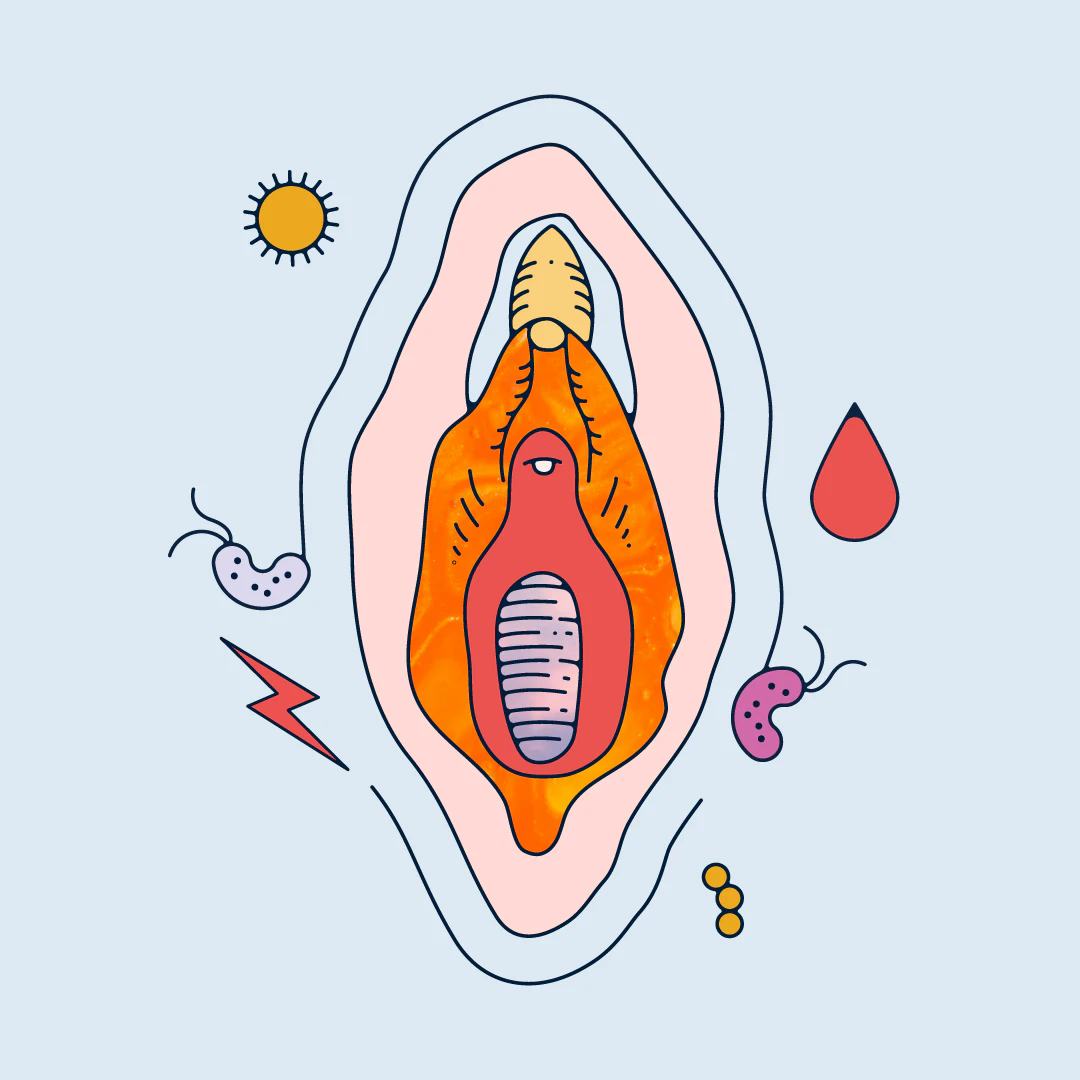
Maybe this sounds familiar: you've been managing unpredictable cycles for years. Now there's a new round of odor, itching or discharge, and you're heading back to the pharmacy for the third time this year. Few people would connect the two. But if you have PMOS (the condition formerly known as PCOS), the hormones driving your cycle may also be shaping the bacteria in your vagina.
A name 90 years in the making
In 1935, two Chicago gynecologists described seven women with missing periods, excess hair and ovaries dotted with what looked like cysts. They weren't cysts: they were follicles that had stalled mid-development. In May 2026, after a global consensus, the condition was renamed PMOS to reflect what it really is: hormonal and metabolic, not just ovarian.
The problem? Those "cysts" aren't really cysts at all. They're immature follicles, eggs that started developing and then stalled. And the name said nothing about the hormones, the blood sugar or the metabolism that make the condition what it is.
So in 2026, after a global consensus process that gathered more than 14,000 survey responses from patients and health professionals, it officially became PMOS: polyendocrine metabolic ovarian syndrome. Support was overwhelming: 86% of patients and 71% of clinicians backed a new name. The switch is happening gradually, with international guidelines expected to fully adopt it by 2028.
Once you see PMOS as a whole-body condition, it makes sense that its effects don't stop at the ovaries.
The hormone tangle behind PMOS
PMOS affects an estimated 170 million women worldwide, roughly 1 in 8 women of reproductive age. Yet the World Health Organization estimates that up to 70% of them are undiagnosed. Getting answers can be a marathon: in an international survey of 1,385 women across 32 countries, one in three waited more than two years for a diagnosis, and nearly half saw three or more health professionals before anyone named it.
It usually comes down to three overlapping threads:
- Raised androgens, hormones like testosterone, which can show up as acne, unwanted hair growth or thinning hair on the scalp.
- Insulin resistance, when your body needs more and more insulin to keep blood sugar steady. It's thought to affect the majority of women with PMOS, including many who are slim.
- Irregular or missing ovulation, which means unpredictable periods and, for some, a harder road to pregnancy.
The tricky part is that these threads pull on each other. High insulin nudges the ovaries to make more androgens, and more androgens can make insulin resistance worse. Round and round it goes.
So what does this have to do with your vagina?
A healthy vaginal microbiome is usually dominated by Lactobacillus, the "good" bacteria that keep things acidic and protected. When researchers compared women with and without the condition, they found that women with PMOS (previously PCOS) tend to have fewer lactobacilli and more of the bacteria linked to BV, like Gardnerella and Prevotella.
Science is still piecing together exactly why, but a few suspects stand out:
A cycle out of rhythm. In a typical cycle, estrogen rises and falls, and progesterone arrives after ovulation. Estrogen keeps the vaginal lining stocked with glycogen, the food lactobacilli live on. When ovulation is irregular, that rhythm breaks, and your microbiome can lose some of its backup.
Androgens change the terrain. Higher androgen levels are linked to shifts in vaginal tissue and immune signalling. Early research suggests this may make it easier for BV-linked bacteria to settle in.
Sugar and inflammation. PMOS often comes with low-grade, body-wide inflammation. And higher blood sugar is good news for yeast, which makes infections more likely.
The gut–vagina hotline. The gut microbiome often looks different in PMOS too. Curious fact: some of your gut bacteria form what scientists call the "estrobolome", a set of microbes that can reactivate used-up estrogen and send it back into circulation. So the bugs in your gut help decide how much estrogen reaches the rest of your body, vagina included. Because your gut and vagina are in constant conversation, what happens in one can show up in the other.
Why this is about more than comfort
An off-balance vaginal microbiome isn't just about annoying symptoms like odor, discharge or itching. PMOS is already the most common cause of infertility due to lack of ovulation, and research has also linked BV-associated bacteria like Gardnerella and Prevotella to lower chances of embryo implantation, miscarriage and IVF setbacks.
That means many women with PMOS who are trying to conceive may be facing two hurdles at once, and only one of them usually gets attention. Ovulation gets tracked, scanned and medicated. The vaginal microbiome rarely gets a second look. It's one more piece of the fertility puzzle, and one worth raising with your clinician.
A note on GLP-1s.
Many women with PMOS are now prescribed GLP-1 medications like semaglutide or tirzepatide off-label. Losing even 5 to 10% of body weight can lower androgens, improve insulin sensitivity, and help bring ovulation back, which may indirectly support a healthier vaginal environment too. There's a flip side, though: fat tissue makes some of your estrogen, so rapid weight loss can lower it and bring dryness or recurring infections. Ovulation can also return unexpectedly. Tirzepatide can make the pill less reliable for four weeks after starting and after each dose increase, so it's worth talking about contraception with your clinician. And if new vaginal symptoms appear during treatment, get them checked.
See the whole picture
PMOS is a whole-body condition, so your care should be too. A few places to start:
- Get to know your hormones. Ask your clinician about testing androgens, blood sugar and insulin markers. It gives you both a clear starting point.
- Don't ignore recurring symptoms. If BV, yeast infections or unexplained symptoms keep coming back, see a clinician for a proper diagnosis, especially if you're trying to conceive. Between visits, Daye's at-home Vaginal Microbiome Screen shows you the balance of bacteria in your vagina. Your sample is processed in CLIA-certified, CAP-accredited labs, and you get results you can share with your provider
- Feed your gut, and your microbiome. Fiber-rich foods and regular meals help keep your gut bacteria happy, and because your gut and vagina are closely connected, that matters down there too. Some women also like to add a probiotic. Daye ProViotics contain 5 billion live cultures of plant-derived Lactobacillus plantarum GLP3, a strain tested to survive both gut and vaginal acidity. They help support a healthy vaginal and gut microbiome and maintain a healthy, acidic vaginal pH. One tablet a day with food, vegan, and no refrigeration is needed.
- Connect the dots. Your metabolic care, gynecological health and fertility goals belong in the same conversation.
Get curious about your microbiome. Daye's at-home Vaginal Microbiome Screen gives you a closer look at the balance of bacteria in your vaginal microbiome.
The new name is a reminder that PMOS is so much more than your ovaries. Your vaginal health is part of that picture, so make sure it's part of your care.