
There is a moment many women know. The one where you're sitting in a GP appointment, voice cracking, apologising for crying. Apologising for not coping. Apologising for the fact that your body has felt like someone else's for months, maybe years, and you haven't been able to put a name to it.
I had that moment. I was 40 years old, a mum of two, a clinician, someone who is supposed to know things about bodies. And still I sat there, shame pooling in my chest, convinced I was just failing at normal life.
This is that story. But it's also a lot of other women's stories. And by the end of it, I want us to feel something different about where we are.
The short version
If you’re at the beginning of this, or the middle of it, this is where I’d point you. The rest of the piece is why.
- Get tested properly. Hormones and microbiome, not just a single reading. Symptoms rarely exist in isolation.
- Find something that makes you feel strong. Weightlifting, walking, dancing, skateboarding, whatever it is. A community around it is even better.
- Protect time that is just yours. Alone time, dark romance, gardening, sitting. Whatever fills you back up.
- Find your people. The ones who hold you without keeping score. You don’t need many. You need the right ones.
- Advocate hard if something feels off. Ask for HRT conversations, testing, reviews. Come to us at Daye if you need a place to start.
- Push on policy where you can. Locally, regionally, nationally. The change happening right now is the result of collective pressure, and we are still under that pressure.
- Share your story. Tell us what you’ve been through and what you need. It changes what the next woman walks into.
What we inherited
Think about the women in your life who went through menopause before you. Your mum, an aunt, a friend's mother. What do you remember about it?
For most of us, the memories are brief and coded. She was difficult, she had her moments, she wasn't herself for a while. There was heat and mood and a kind of chaos no one quite explained. It was hushed up. Managed. Waited out.
The shame around menopause is ancient, and it is layered. Generations of women were handed this experience with no language for it, no framework, no clinical care. What they got instead was silence, or worse, the message that what they were experiencing was embarrassing. A loss of composure. A loss of the power of femininity and the strength of youth. Something to apologise for and hide.
That inheritance sits in us whether we know it or not. Long before our own hormones start to shift, we've already absorbed the idea that this transition is something to dread. Something that will make us less. Something that happens to other women.
So when the symptoms came for me, and they came early, in my late thirties, long before anyone wanted to call it perimenopause, I had no map. I had only the vague inherited dread, and a growing conviction that I was falling apart.
The gap no one told us about
Female-specific conditions account for only 5% of biopharmaceutical research spending. Menopause receives a fraction even of that. For decades, women were excluded from clinical trials entirely. Our bodies are deemed too complicated, our hormonal fluctuations too challenging to account for. Men were the default. Women were the edge case.
A 2023 Nature editorial put it plainly: menopause research is globally underfunded, despite the fact that 40% of a woman's life is now spent in the postmenopausal years. Women's midlife health has been called "an unfinished research agenda." An unfinished agenda. Meaning we already knew the work was needed. Yet, we still haven’t chosen to adequately fund and finish the research task at hand.
The consequences of this gap are not abstract. They live in women who spent years being told their symptoms were anxiety, or stress, or just what happens when you have children. They live in the cardiovascular disease risk that accelerates after menopause, in the osteoporosis that develops quietly and preventably over decades, in the cognitive fog and the rage and the sleeplessness that no one took seriously until relatively recently.
We didn't fall behind by accident. We were held back. And understanding that is important, because it shifts where the shame belongs.
It doesn't belong with us.
My story (or: the years everything felt off)
After my second child, something changed. I'd always had ADHD, manageable, familiar, something I'd worked around. But now it is worsening. My histamine was high. My anxiety spiked in ways I couldn't explain or predict. There was rage, sudden and out of proportion, that frightened me. There was exhaustion that sleep didn't fix.
I kept going to appointments and kept describing symptoms. I kept being told I was too young for perimenopause, that it was probably postnatal, probably my lifestyle and that I needed to manage my stress.
I want to say something about that phrase, "you're too young," because I've heard it so many times from patients since, and it does a particular kind of damage. Perimenopause can begin in the late thirties. Symptoms can appear years before any formal diagnosis, and as women we know our bodies best. When we say something is wrong, something is usually wrong. Dismissing us at that stage doesn't make us better; it just makes us wait longer.
I waited until I couldn't anymore, and then I found a doctor, my age, as it happened, which I think mattered, who sat with me while I cried and didn't once suggest I was overreacting. She asked questions, and she listened to the answers. She also ordered the tests, and we talked about HRT.
There was no judgment and no waiting to see if I'd feel better on my own. No suggestion that I should toughen up or slow down. Just a conversation between two people taking a problem seriously.
I walked out of that appointment thinking: why can't all women get this?
That question is part of why I'm at Daye.
A new language: discovering the climacteric
It was Poorna Bell's book She Wanted More that changed something for me, not just emotionally, but linguistically. Because in it, I came across a word I'd never really used before, even as a clinician.
Climacteric.
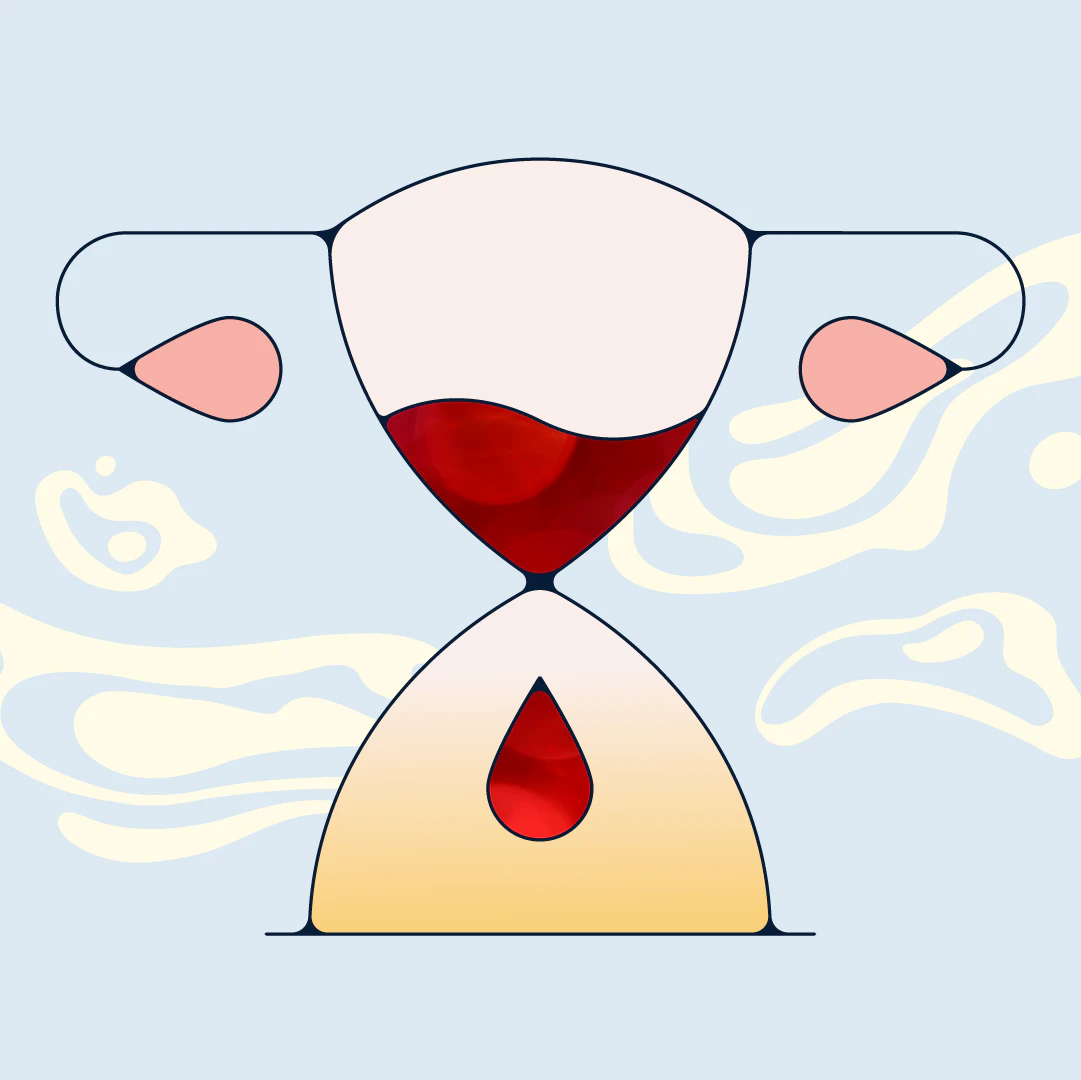
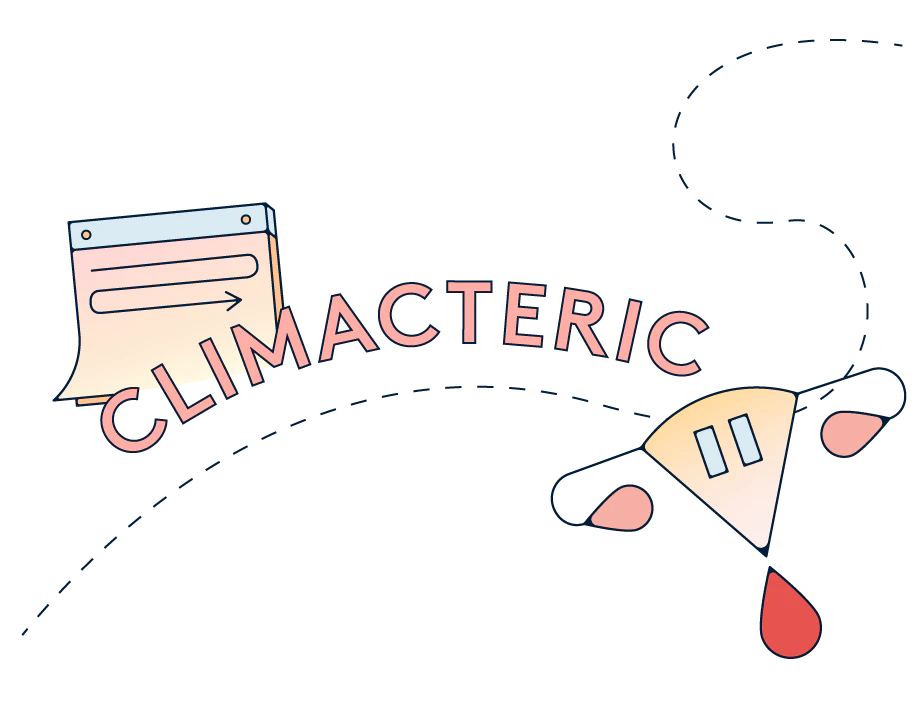
The climacteric isn't the same as menopause, though the terms are often muddled. Menopause is a single moment, technically twelve months after your last period. The climacteric is the entire arc of transition: perimenopause, menopause, postmenopause. The whole journey and it often spans over a decade.
What struck me was what that reframe did to the experience. Menopause, as a word, has always felt like a door closing, an ending and something to survive. But climacteric carries a different energy. It's a threshold, not a finale. A period of profound hormonal and physical change that also, and here is the part that medicine has barely begun to account for, does something to a woman psychologically.
Something necessary. Something even, if we let it, something good.
I think about the women in my life who had their menopause moments. The ones who were dismissed, or who dismissed themselves. Who put a lid on the heat and the emotion and waited for it to pass. What if they had been given language for what they were going through? Not illness. Not breakdown. A rite of passage.
That's what the climacteric is. We just haven't been allowed to call it that.
What the medicine is finally catching up to
I want to be clear about something, because misinformation around HRT has done enormous damage. The evidence for hormone replacement therapy, started in women under 60 or within ten years of menopause onset, is strong. Recent long-term follow-up data from the Women's Health Initiative, the same study that caused two decades of fear around HRT in the early 2000s, shows no increased risk of death from breast cancer or cardiovascular disease in the women in those trials. A 2022 review found that when started at the right time, HRT significantly reduces all-cause mortality and cardiovascular risk, outcomes that very few other primary prevention therapies can claim.
HRT protects bones, reduces fracture risk, and can improve cognition, mood, and sleep. It is not a cure, and it is not right for everyone. But it is a genuine clinical option that generations of women were denied, partly because of that misread study, and partly because menopause care was simply not prioritised.
The UK is beginning to catch up. England launched its first Women's Health Strategy in 2022, with menopause named as a priority. April 2023 brought a new HRT prescription prepayment certificate, cutting annual costs to £19.30. Women's health hubs are being rolled out across England with a £25 million investment. The NHS National Menopause Care Improvement Programme is working to reduce disparities in access and training.
These are not small things. They are the result of women advocating, loudly and persistently, over many years. And they are a start. Just a start.
I don't want to give the gap in care any more airtime than it deserves. What I want is to point us forward. Because sitting in anger about the decades we lost is one part of this, but only one part. The other part is deciding what we do with what we now have.
The reclamation
Here is what I am learning at 42, on HRT, still figuring out my progesterone and histamine and ADHD: this transition is not what I was afraid of.
It's loud, yes. It's uncomfortable. There are days when I am still working out what my body needs and getting it wrong. But there is something else happening underneath that I can only describe as a clarification. A sharpening of what matters and a very short fuse for what doesn't.
Poorna Bell writes about this. So does almost every woman I've spoken to who has come through the other side. Something falls away. The tolerance for situations and relationships and expectations that were never really yours, it evaporates. You run out of patience for performing yourself. You get interested, instead, in just being yourself.
My 40s have brought me to strength training with a 51-year-old bodybuilder coach who has never once suggested I should be smaller. To darker, stranger books. To friendships that feel less like obligation and more like oxygen.
This is what I mean by reclamation. Not a dramatic rejection of everything that came before, but a reorientation. A permission to take up space.
I think about Rosalía, about Björk, music made by women in full possession of themselves, not performing smallness. There's something in that frequency that speaks directly to this moment. The 40s as a beginning, not an ending. The climate is the call to finally come home to yourself.
That's what I want for every woman who reads this.
The cultural moment we are inside
There's a bigger context to all of this, and I want to name it without being naive about it.
Something is shifting. Slowly, unevenly, with plenty of setbacks, but shifting. Women's voices in healthcare are getting louder and, occasionally, they're being heard. The generations of women who were dismissed are producing daughters who are quicker to advocate, quicker to name what they need, quicker to refuse the shame.
I feel this in the rage that comes up in me when I think about what previous generations were denied. That rage is not just mine, it's inherited. It's the accumulation of all the appointments where someone's symptoms were minimised, all the HRT conversations that never happened, all the bones that could have been protected and weren't.
I don't want to weaponise that anger. I don't want us to become a movement defined by blame. But I do want us to feel it, clearly and without apology, and then use it as fuel for building something better.
The women who are talking openly now, Poorna Bell, Davina McCall, and so many others, are refusing to let this conversation stay in the corners where it was kept for decades. They are making it normal to speak about sex, pleasure, HRT, perimenopause, desire, body changes, all of it, at full volume and without embarrassment. That visibility matters more than it might seem. It gives the rest of us permission to start talking too.
At Daye, we believe women deserve to have their voices heard and their experiences believed. Not eventually. Now. That's not a mission statement. It's the reason I'm here.
What's helped me (honest version)
I want to share what's actually been useful, because I'm tired of wellness content that sounds good but says nothing.
Getting properly tested is where I'd start. Not just the basic bloods, hormones, microbiome, thyroid, iron, the lot. I was living with low Lactobacillus, which was driving recurrent UTIs and contributing to my symptoms in ways nobody had connected. You cannot treat what you haven't found.
HRT took time to get right, and I want to say that out loud, because I think a lot of women give up too early. Managing progesterone has been its own project. If your first prescription doesn't work perfectly, that doesn't mean HRT doesn't work. It means the formulation or dose needs adjusting. Advocate for the review.
Strength training has been, pound for pound, the most significant thing I've done for my physical and mental health. Building muscle during the perimenopause years matters for bone density, metabolism, and mood. Find something that makes you feel powerful in your body, not punished by it.
The community piece I underestimated. I have a group of people around me now, women and men, who support without keeping score. Where you can fall apart and be held without shame. That is not a luxury. It's necessary.
And pleasure. This sounds small and it isn't. Pole dancing. Dark romance novels. Sitting outside doing nothing. Reclaiming the parts of your life that are just yours, not mum, not colleague, not partner, matters enormously during this transition.
If you have any capacity to influence policy at any level, local, regional, national, use it. Write to your GP practice. Join a patient group. Support the organisations working to close the women's health gap. The change that's happening is the result of collective pressure. We all need to be part of that pressure for change.
A letter to what comes next
I am only at the beginning of this. I know that. I'm 42 and I'm piecing this together in real time, and some days are still hard.
But I'm not afraid of it anymore. That's new.
To the women who came before me, the ones who didn't have any of this, who had no name for what they were going through, no doctor who listened, no book like Poorna's, no community, no HRT, nothing: I see you. What you carried, and what you passed to us, including the fear, including the silence, including the rage, it is not lost. We're feeling it now, on your behalf and ours, and we're trying to do something with it.
To the women going through this now: you are not unhinged. You are not failing. You are in one of the most significant transitions of your life, in a body that has been barely researched and underserved for decades, doing your best with tools that are only just becoming available. That is not a weakness. That is extraordinary.
The climacteric is not an ending.
It is, I am slowly learning, the point at which you finally stop performing and start living. Where wisdom isn't a consolation prize for aging but an actual, tangible, hard won thing. Where the tolerance for nonsense reaches zero and the appetite for a real life reaches everything.
Forty is not the beginning of the end. It's just the beginning.
What if we gave ourselves permission to live the next thirty or forty years without anyone else's approval? Without the inherited shame? Without the dread?
I'm trying. Come with me.
Over to you
I'd love to hear from you. What has your experience been? What do you wish someone had told you earlier? What does Daye need to do more of?
Find me, and find us, here.
Lucie Osborne is a cancer clinician and advocate at Daye. She is currently 42, on HRT, and at the absolute beginning of something.
Poorna Bell – She Wanted More Davina McCall – menopause advocacy UK Women's Health Strategy (2022, renewed 2026)