


A gynecologist and a cardiologist walk into a room. They don't speak to each other. There's no punchline, which is more or less the problem.
One in eight women has a condition that belongs to both gynecology and cardiology. For ninety years it has been filed under the wrong department, named after the wrong organ, and treated as a fertility inconvenience. In May 2026, that finally changed.
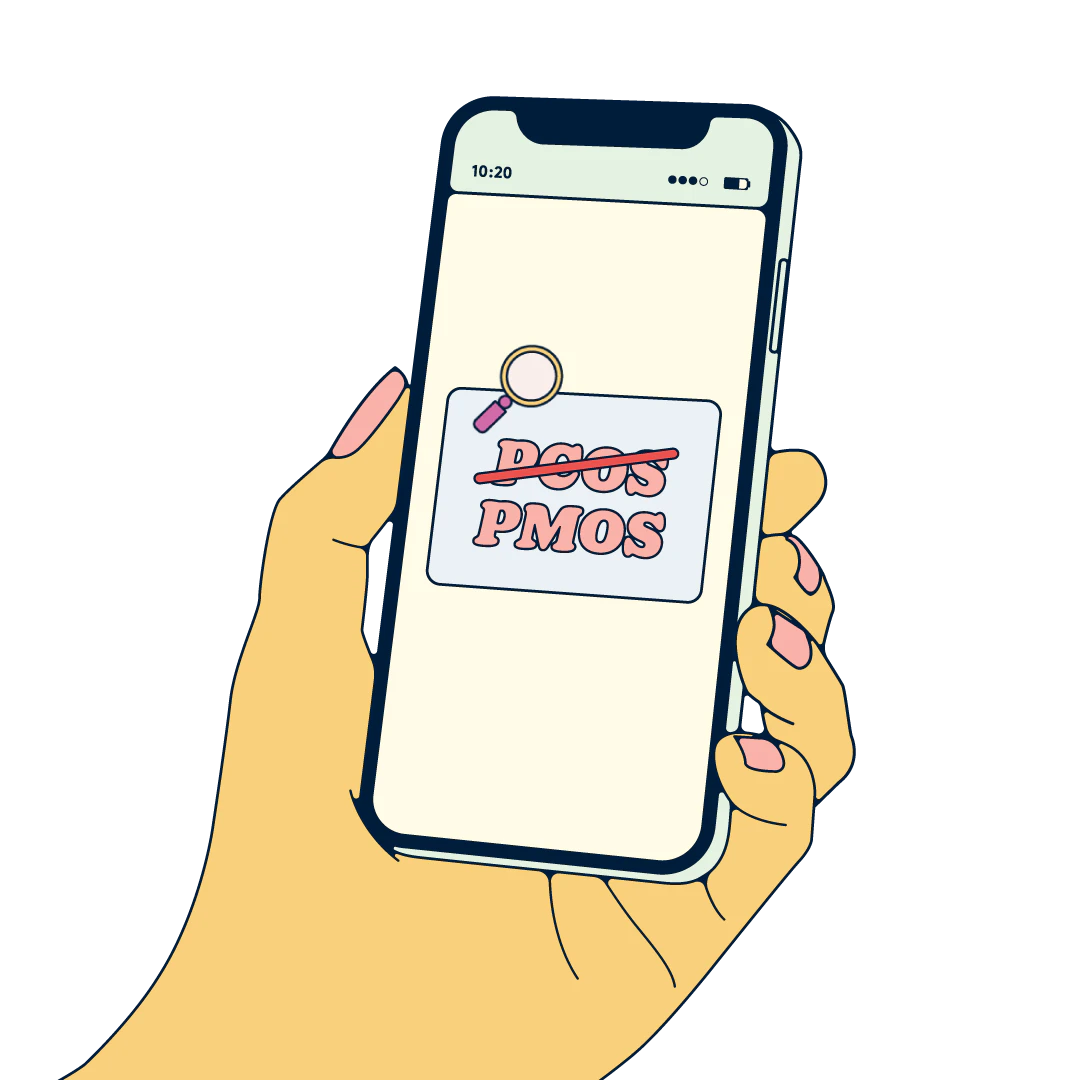
PCOS now has a successor: PMOS - Polyendocrine Metabolic Ovarian Syndrome. Eleven years of consensus-building, 14,360 survey responses from patients and clinicians across every world region, 56 medical and patient organizations, one near-unanimous vote, published in The Lancet.
This is not a rebrand. It's a correction. The old name was wrong twice over, and both errors cost women years.
There were never any cysts
Start with "polycystic." What showed up on the ultrasound wasn't cysts. They're immature egg follicles that stalled out before ovulation - normal structures caught mid-sentence, not growths.
So for decades, women walked out of appointments quietly terrified of something that was never there, while the actual problem went unmentioned. Ninety years of anatomical fan fiction, essentially.
And it was never really about the ovaries
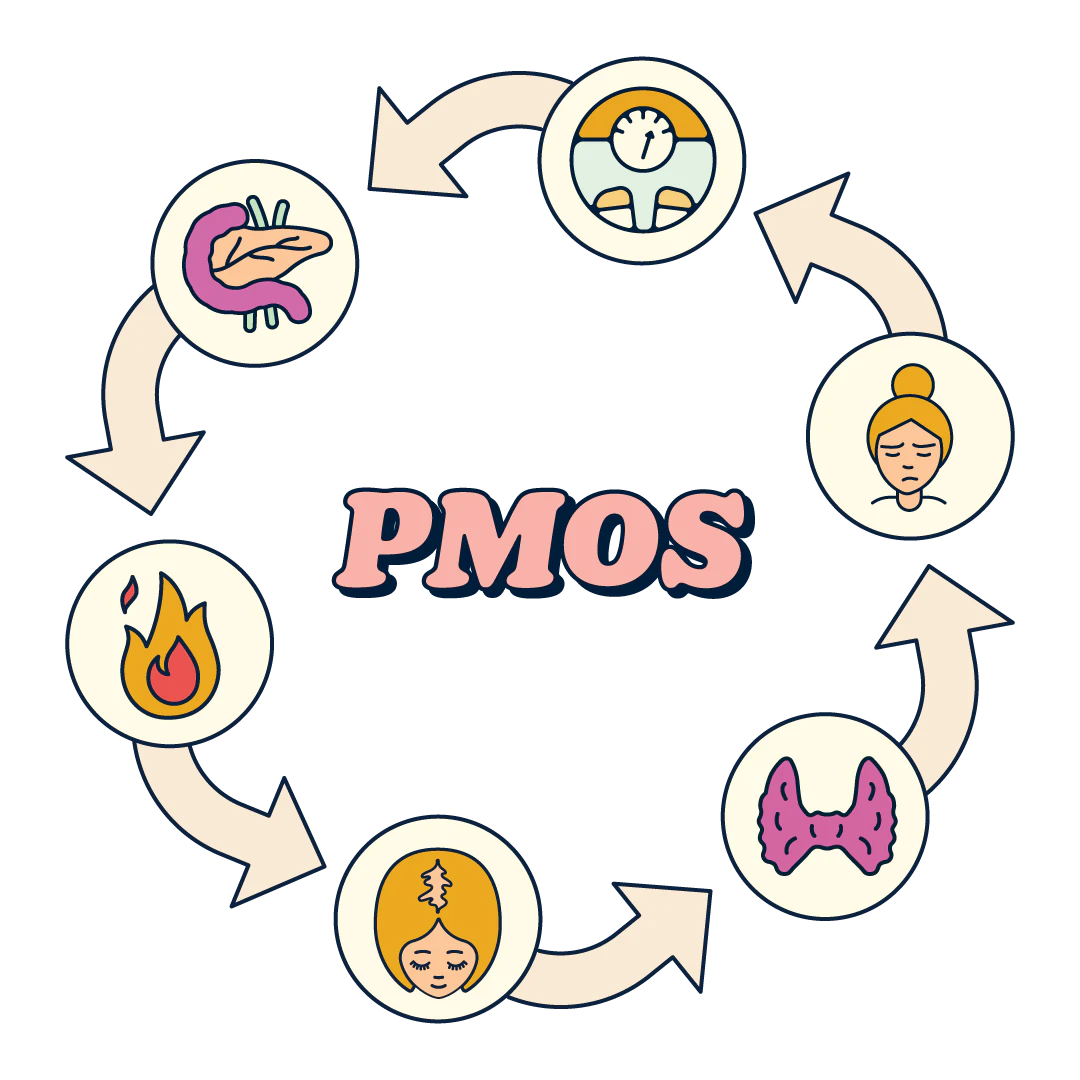
This is the bigger sin. PMOS is not an ovary problem in a reproductive-health costume. It's a whole-body endocrine and metabolic condition: insulin resistance, inflammation, thyroid, skin, mood, weight, hair. The ovaries just happen to be the part you can point a scanner at.
Name a systemic condition after the one organ that photographs well, and you get exactly what we got. A gynecology referral. A packet of pills. A "come back if you want to get pregnant." More than 170 million people worldwide have this, and up to 70% of them don't know it yet.
Fix the name, and you fix where the referral goes. That's the entire bet.
Two out of three. That's the whole bar.
Here's the part far too few people know: you don't need everything to line up for a PMOS diagnosis.
The criteria are irregular ovulation, high androgens (on bloods or on your face), and polycystic ovarian morphology on a scan. You need two of the three. Not all three.
If your cycles are irregular and your bloodwork or symptoms point to raised androgens, you've already met the bar. No ultrasound required. Current guidelines let adults swap the scan for an AMH blood test entirely.
So why does diagnosis still take years and a rotating cast of specialists?
Because your symptoms get split up and posted to different departments instead of read as one story. Acne goes to dermatology. Hair growth goes to a salon and a lot of private shame. Weight gets a comment rather than a workup. Low mood gets fifteen minutes with a GP who has a different agenda. Irregular periods get the pill and a cheerful "let's monitor it."
Nobody is holding all five threads at once. And insulin resistance - the engine running underneath most of this - often doesn't get tested for years, whatever you weigh.
That isn't one clinician failing you. That's a health system organised by organ, applied to a condition that doesn't respect the filing system.
The conversation nobody had with you at 24
A 2026 study in The Lancet Obstetrics, Gynecology & Women's Health followed 413,450 women with PMOS, average age 31, against two million matched controls. Their risk of atherosclerotic cardiovascular disease was four and a half times higher.
The researchers then went looking for the usual suspects: high blood pressure, type 2 diabetes, high cholesterol, obesity. Together, those explained roughly a third of the excess risk. Two thirds of it is still unaccounted for.
Read that again, because it's the part that matters. Being a healthy weight has never made you low-risk here. The risk travels with the condition, not with the scales.
If you were diagnosed with PCOS in your twenties and nobody said a single word about your heart, that conversation isn't over. It just never started.
Awareness is free. Testing isn't, but it's the bit that works.
This September is the first PMOS Awareness Month since the rename. Treat it as a dress rehearsal for saying the right name out loud.
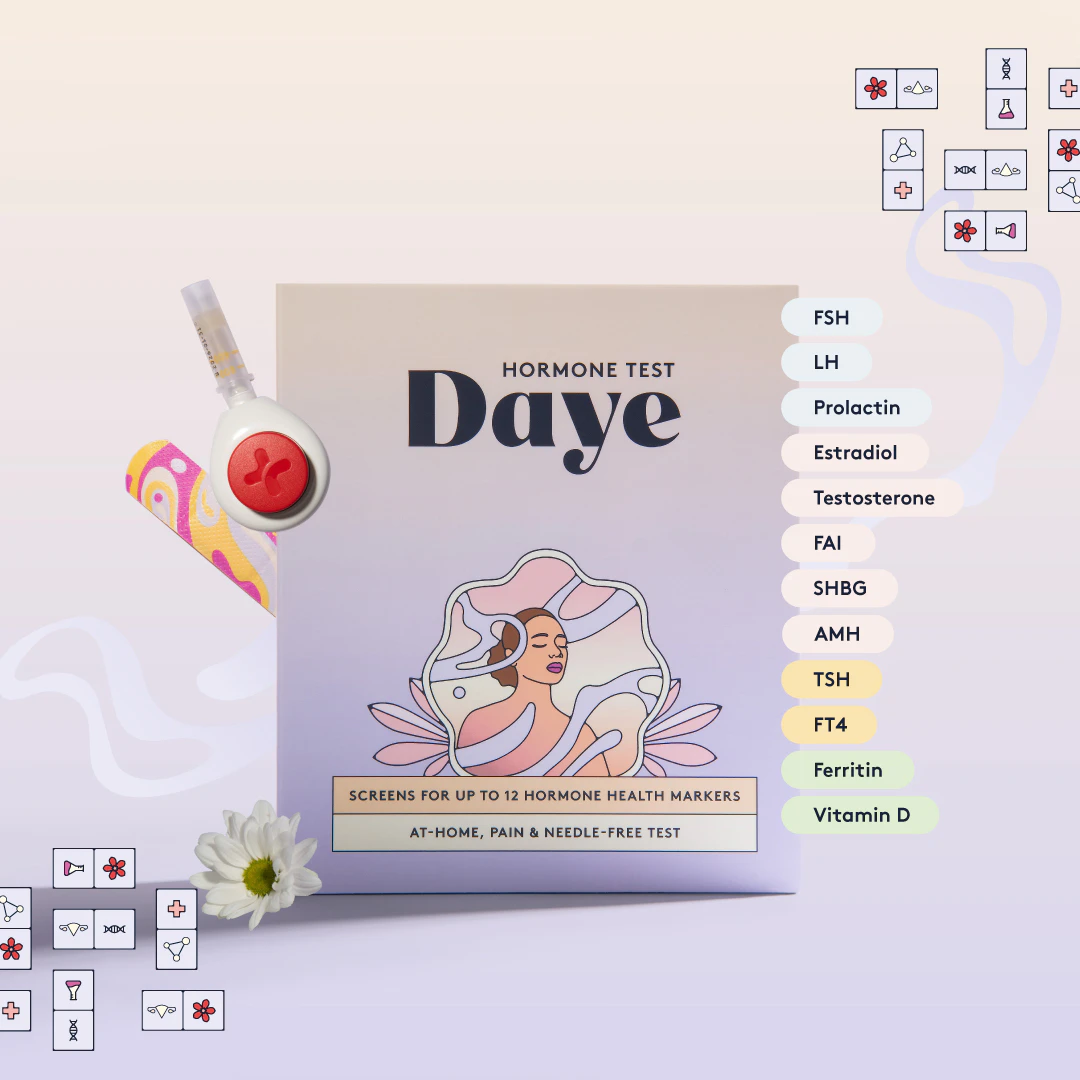
But awareness on its own changes nothing. Data does. Daye's at-home Hormone Test measures the androgen and thyroid markers most people with PMOS are never offered, with no referral queue and no waiting room.
And because "come back in six months" is not a clinical plan, we're launching the at-home PMOS Assessment: symptoms in, an actual answer out, plus the next steps that should have come with it the first time. Join the waitlist and be the first to try our new product.