


Vaginal Microbiome Test
Explore your unique vaginal microbiome composition with our convenient, at-home tampon sample collection kit. Learn about the balance of microorganisms in your vaginal environment.


Frequently bought together

Who is this service for?
If you have recurrent infections
If you have recurrent infections
Our Microbiome Test measures the balance of beneficial and potentially disruptive bacteria naturally present in the vagina, helping you understand your susceptibility to infection.
We suggest screening 2-4 times per yearIf you have fertility concerns
If you have fertility concerns
The vaginal microbiome plays a role in reproductive wellness, and disruptions can impact fertility.
We suggest a one-off screen to understand your balance.If you are in (peri)menopause
If you are in (peri)menopause
During perimenopause, hormonal changes can affect your vaginal microbiome, which may influence vaginal comfort and wellness.
We suggest two screens per year to support a healthy and well-balanced vaginal environmentDetect levels of bacteria that can disrupt the vaginal flora
Discover your levels of protective lactobacilli bacteria
Support your fertility journey with a balanced microbiome
Learn about your vaginal microbiome's role in reproductive health


Wait, the vaginal micro-what?
Like your gut, your vagina is home to billions of bacteria (some good, some bad). These make up your vaginal microbiome. The balance of your vaginal microbiome can influence different aspects of your reproductive and vaginal wellness.
Which microorganisms do we test for?
Using advanced PCR technology, Daye tampons collect vaginal fluid samples from the entire vaginal canal. This allows for a comprehensive analysis of your vaginal microbiome.
Lactobacilli
Good bacteria in your vaginal microbiome.
Anaerobic bacteria
Cause infections like bacterial vaginosis (BV).
Candida
Candida is a fungus which affects 75% of women.
Mycoplasma/ Ureaplasma
According to studies, can affect fertility.
Chlamydia
A very common STI caused by a bacterial infection.
*Only available with the STI Screen
Gonorrhoea
An STI that can affect both men and women.
*Only available with the STI Screen
Trichomoniasis
One of the most common STIs worldwide.
*Only available with the STI Screen
HPV screening
Detects the presence of high risk human papillomavirus strains.
*Only available with the HPV Screen
Herpes Type I & II
Can potentially infect another person.
*Only available with the STI Screen
What is included with every screening?
Order your screening kit & get it delivered to your door
The kit will arrive at your doorstep in a discreet package, designed for convenient at-home use.

Collect and send off your sample to our accredited lab
Activate your kit with your unique code, complete a short questionnaire, and send your sample - we'll handle the rest.

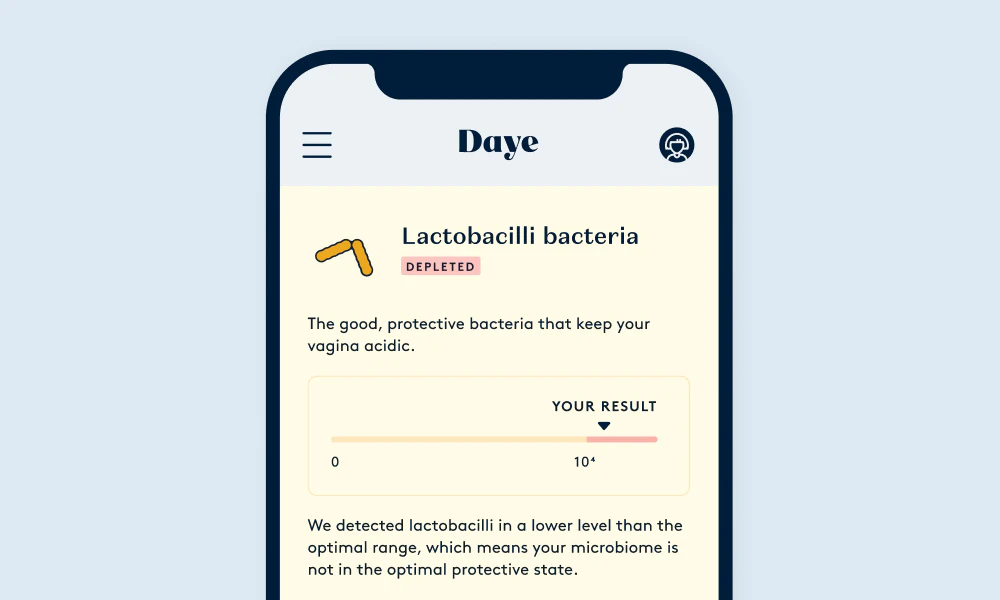
Receive detailed microbiome insights
We will never leave you hanging. Access a range of resources – from consultations with coaches to personalized lifestyle suggestions to action your results.
Connect with vetted coaches & get personalized support
After reviewing your report, you can set up virtual consultations with our coaches specializing in vaginal and reproductive wellness including fertility and menopause support.

Discover simple everyday changes you can implement support your vagina
Every report includes science-backed, personalized insights into lifestyle changes you can adopt to further enhance your microbiome balance.

Be your own health hero
Got an infection that keeps coming back?
Got an infection that keeps coming back?
Understanding your microbiome can provide insights into your vaginal health patterns.
Learn moreGoing through menopause?
Going through menopause?
Nurture your microbiome as your body adapts to the natural hormonal changes.
Learn more


Choose a screen that works for you
Microbiome + STI + HPV Screen
£277
What we test for:
Lactobacilli
Common BV related bacteria
Candida
Mycoplasma hominis
Ureaplasma
Gonorrhea
Chlamydia
Trichomoniasis
Mycoplasma genitalium
HPV16
HPV18
12 other high-risk HPV types
HPV + Microbiome + STI Screen
£277
What we test for:
HPV16
HPV18
12 other high-risk HPV types
Lactobacilli
Common BV related bacteria
Candida
Mycoplasma hominis
Ureaplasma
Gonorrhea
Chlamydia
Trichomoniasis
Mycoplasma genitalium
STI + Microbiome + HPV Screen
£277
What we test for:
Gonorrhea
Chlamydia
Trichomoniasis
Mycoplasma genitalium
Lactobacilli
Common BV related bacteria
Candida
Mycoplasma hominis
Ureaplasma
HPV16
HPV18
12 other high-risk HPV types
STI + Microbiome Screen
£188
What we test for:
Lactobacilli
Common BV related bacteria
Candida
Mycoplasma hominis
Ureaplasma
Chlamydia
Gonorrhea
Trichomoniasis
Mycoplasma genitalium
Microbiome + STI Screen
£188
What we test for:
Chlamydia
Gonorrhea
Trichomoniasis
Mycoplasma genitalium
Lactobacilli
Common BV related bacteria
Candida
Mycoplasma hominis
Ureaplasma
Microbiome Screen
What we test for:
Lactobacilli
Common BV related bacteria
Candida
Mycoplasma hominis
Mycoplasma genitalium
Ureaplasma
See our Founder’s results!
Wondering what we test for, and what results look like? Enter your email below and Valentina, our Founder, will send you her screening report.
By entering your email above you agree to receive marketing emails and promotions from Daye.
Your data is for your eyes only
Protecting your privacy is the least we can do
Frequently asked questions
Still have questions? Read all of our FAQs.
Relevant Research
Diagnosis of bacterial vaginosis on self-collected vaginal tampon specimens
2002 • P D J Sturm, P Moodley, G Nzimande
Results of the tampon and vaginal smears showed excellent agreement for both observers (Spearman >0.80). The overall sensitivity and specificity were 91.7% (95% CI: 81.6-96.5) and 79.3% (95% CI: 67.2-87.8), respectively, using the Amsel criteria as reference standard. The tampon provides a specimen for the combined diagnosis of non-ulcerative STIs and BV.
A Self-Administered Technique for the Detection of Sexually Transmitted Diseases in Remote Communities
1997 • Sepehr N. Tabrizi, Barbara Paterson, Christopher K. Fairley, Francis J. Bowden, Suzanne M. Garland
The detection of each organism was significantly greater by PCR in tampon-collected samples than by routine conventional methods (P < .01).
Pilot study of the utility and acceptability of tampon sampling for the diagnosis of Neisseria gonorrhoeae and Chlamydia trachomatis infections by duplex realtime polymerase chain reaction in United Kingdom sex workers
2010 • P T Kimmitt, S N Tabrizi, M Crosatti, S M Garland Frcpa, P C Schober, K Rajakumar, C A Chapman
Besides near-universal acceptability of tampon sampling, the tampon sampling–PCR approach described in this study appeared to have enhanced sensitivity compared with conventional testing.
Vaginal microbiome and sexually transmitted infections: an epidemiologic perspective
2011 • Rebecca M. Brotman
Vaginal bacterial communities are thought to help prevent sexually transmitted infections. Bacterial vaginosis (BV) is a common clinical syndrome in which the protective lactic acid-producing bacteria (mainly species of the Lactobacillus genus) are supplanted by a diverse array of anaerobic bacteria. Epidemiologically, BV has been shown to be an independent risk factor for adverse outcomes including pre-term birth, development of pelvic inflammatory disease, and acquisition of sexually transmitted infections. Longitudinal studies of the vaginal microbiome using molecular techniques such as 16S ribosomal DNA analysis may lead to interventions that shift the vaginal microbiota toward more protective states.
The Vaginal Microenvironment: The Physiologic Role of Lactobacilli
2018 • Emmanuel Amabebe, Dilly O. C. Anumba
Lactobacilli and their antimicrobial and anti-inflammatory products along with components of the epithelial mucosal barrier provide an effective first-line defence against invading pathogens including bacterial vaginosis, aerobic vaginitis-associated bacteria, viruses, fungi and protozoa. An optimal host-microbial interaction is required for the maintenance of eubiosis and vaginal health.
The role of Escherichia coli in reproductive health
2017 • P Cools
Vaginal dysbiosis has been associated with increased susceptibility to and transmission of HIV and other sexually transmitted infections and increased risk of pelvic inflammatory disease, pre-term birth and maternal and neonatal infections.
Pregnancy's Stronghold on the Vaginal Microbiome
2014 • Marina R. S. Walther-António, Patricio Jeraldo, Margret E. Berg Miller, Carl J. Yeoman, Karen E. Nelson, Brenda A. Wilson, Bryan A. White, Nicholas Chia, Douglas J. Creedon
Our analyses indicate normal pregnancy is characterised by a microbiome that has low diversity and high stability. While Lactobacillus species strongly dominate the vaginal environment during pregnancy across the two studied ethnicities, observed differences between the longitudinal dynamics of the analysed populations may contribute to divergent risk for pregnancy complications. This helps establish a baseline for investigating the role of the microbiome in complications of pregnancy such as pre-term labour and pre-term delivery.
The vaginal microbiome as a tool to predict IVF success
2020 • Sam Schoenmakers, Joop Laven
The vaginal composition prior to the start of hormonal treatment for ART seems to be predictive of in vitro fertilization/in vitro fertilization-intracytoplasmic sperm injection (IVF/IVF-ICSI) outcome, with mainly a highly negative predictive value.
Early pregnancy vaginal microbiome trends and pre-term birth
2017 • Molly J. Stout, Yanjiao Zhou, Kristine M. Wylie, Phillip I. Tarr, George A. Macones, Methodius G. Tuuli
In a predominantly African-American population, a significant decrease of vaginal microbial community richness and diversity is associated with pre-term birth. The timing of this suppression appears early in pregnancy, between the first and second trimesters, suggesting that early gestation may be an ecologically important time for events that ordain subsequent term and pre-term birth outcomes.
The role of the vaginal microbiome in gynaecological cancer
2017 • M Champer, A M Wong, J Champer, I L Brito, P W Messer, J Y Hou, J D Wright
Human microbiome research has shown commensal bacteria to be a major factor in both wellness and disease pathogenesis. Interest in the microbiome has recently expanded beyond the gut to include a multitude of other organ systems for which the microbiome may have health implications. Here, we review the role of the vaginal microbiome in health and disease, with a particular focus on gynecologic malignancies. Further, we suggest that it may be possible to expand the use of probiotics in the treatment of gynaecological cancers.
Association between polycystic ovary syndrome and the vaginal microbiome: A case-control study
2020 • Xiang Hong, Pengfei Qin, Kaiping Huang, Xiaoling Ding, Jun Ma, Yan Xuan, Xiaoyue Zhu, Danhong Peng, Bei Wang
There was significant difference in vaginal bacterial structures between PCOS and healthy control women. The relative abundance of Lactobacillus crispatus in the PCOS group was significantly lower than controls (P = .001), and the relative abundance of Mycoplasma and Prevotella was higher than controls (P < .001, P = .002, respectively). The Mycoplasma genus could be a potential biomarker for PCOS screening, as ROC analysis showed that the area under the curve (AUC) for the relative abundance of Mycoplasma was 0.958 (95% CI: 0.901-0.999).
Menstrual Tampons Are Reliable and Acceptable Tools to Self-Collect Vaginal Microbiome Samples
2023 • Florence Turner, Josephine Drury, Dharani K Hapangama, Nicola Tempest
Many women report embarrassment as the cause for their avoidance of routine gynaecological screening appointments. Methods of self-collection of bio samples would perhaps encourage women to participate in routine screening programs. The vaginal microbiome plays a key role in women's health and reproductive function. Microbial disturbances can result in the loss of lactobacillus dominance, also known as dysbiosis, associated with an increased risk of contracting sexually transmitted infections (STIs), pregnancy complications and infertility. All (100%) of volunteers were happy to provide a tampon as a sample for testing. The findings from this study show that tampons and LVSs were comparable when analysing the vaginal microbiome, with potential superiority of the tampon with regard to patient acceptability.