

If you’ve ever used a tampon – or read the back of a tampon box – you’ve probably heard of Toxic Shock Syndrome (TSS). This a rare yet potentially fatal bacterial infection is associated with tampon use. However, few people are aware of a much more common issue with tampons: fiber loss.
Do tampons leave fibers behind?
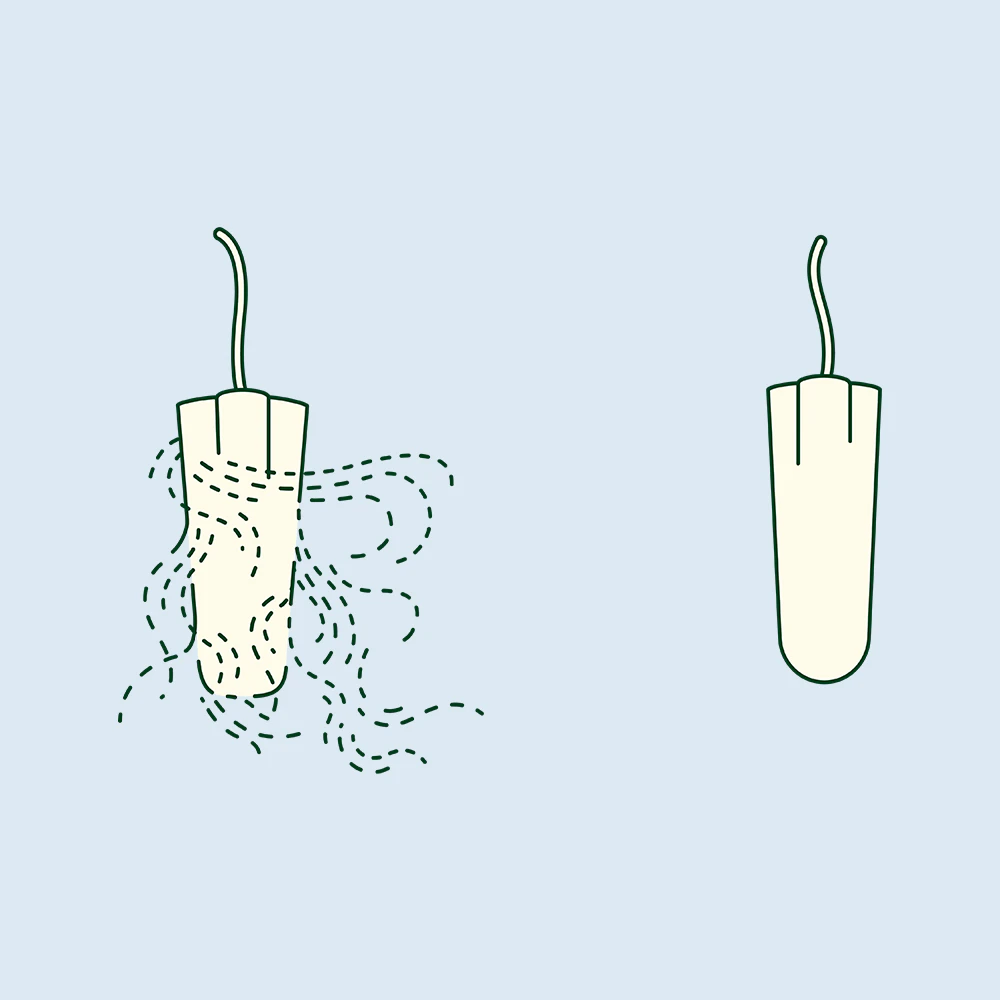
Fiber loss happens when a tampon sheds inside the vaginal canal, leaving behind small pieces of filament (fuzzy bits that look like faux fur). Most fiber loss is caused by the friction of inserting and removing tampons.
Does tampon shedding sort itself out?
Although the vagina is a self-cleaning organ, it's not able to flush out pieces of tampon left inside. These can end up near your cervix and have been known to cause pathogen colonisation and vaginal infections like yeast infection and BV – two common (yet equally unpleasant) conditions.
What experts say about tampon fiber shedding
Tampon fiber loss is such a common issue that doctors and nurses often have to remove fiber build-up in patients before being able to conduct exams like cervical screening.
"Fiber loss is why I stopped recommending tampons to my patients," says Dr. Dimitar Georgiev, an OBGYN with 20 years of practice. "In fact, I actively dissuade them from using tampons," he tells Daye.
The risk of TSS and microbiome issues
“The issue with tampon fiber shedding is that the potential breeding grounds remain after the tampon is removed, giving bad bacteria more of a chance to get established,” adds Dr. Harry Baxter, Daye’s Deputy Head of Research. “This impacts TSS risk as well as issues with your vaginal microbiome.”
“As with anything vaginal microbiome-related, there isn't a panacea, but as we learn more and more about ‘good’ and ‘bad’ vaginal bacteria, we are learning more and more about the importance of products that don't give bad bacteria any head-starts.”
Vaginal pH imbalances
“My concern as a gynecologist is that the residual fibers are a nidus will absorb blood and fluid which was intended to be expelled along with menses,” adds Dr. Melanie Bone, an OBGYN and member of Daye’s Medical Advisory Board. “This might impact the microbiome, the pH, and the delicate bacterial balances in the vagina.”
How to test whether your tampon is shedding
How do you know if your tampon is guilty of fiber loss? Dip an unused tampon in a glass of water, wait a few moments, and you’ll probably start to see fibers falling away from the tampon. To check whether an organic tampon sheds, rub the surface and you’ll see how even the slightest pressure will cause fibers to flake off.
Think about how long tampons usually stay inside of your vaginal canal… Yeah, not cute.
What is a protective sleeve?
When tampon manufacturers caught wind of the fact that fiber loss was becoming a concern, some (not all) started adding a protective sleeve to their tampons.
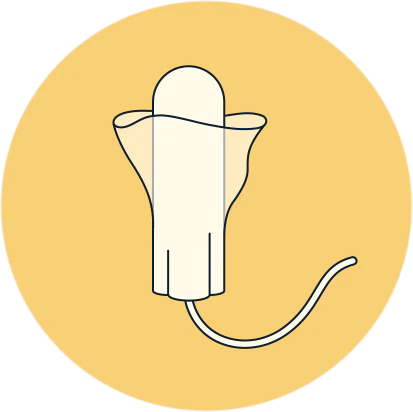
A protective sleeve is wrapped around the core of the tampon to reduce fiber loss, and is often made of melted plastic or cotton. Protective sleeves are typically pressed onto the tampon with heat, which can still rub off during insertion and removal.
What are most tampons made of?
Mainstream tampons are either made of rayon (a plastic often treated with chemicals such as dioxin and phthalates), or non-organic cotton that is typically grown using pesticides and herbicides, and then bleached with chlorine. Sometimes, they’re made with a mix of the two, but because of the way the materials are woven, both materials are prone to shedding.
Are organic tampons better?
Organic tampons are made of natural cotton fibers – surely they’re the healthiest option, right? While organic tampons don’t contain plastic (definitely a bonus), they’re still not risk-free. Build-up of organic cotton fibers can still put you at risk of vaginal infections.
Tampon manufacturers don’t need to disclose ingredients
Tampon manufacturers aren’t legally required to disclose the ingredients found in their tampons. Why? Because the Medicines and Healthcare products Regulatory Agency (MHRA) classifies tampons as a “cosmetic/toiletry product.” That means they don’t have to comply with the same regulations and manufacturing guidelines as medical devices.
Tampons don’t require sanitization
The tampon manufacturing process doesn’t include sanitization at any point. This means bacterial contamination can be found on the surface of your tampon.
Whether you’re using mainstream or organic tampons, you can never really know what’s inside them – and therefore inside you.
Why Daye tampons are different
Daye tampons have a permeable, protective sleeve made entirely of cotton fibers. Using a process called “hydroentanglement” the material is non-woven, then sewn on. This ensures that Daye tampons won’t shed inside of you and this sleeve stays put through the entire wear.
The interior material of our tampons are also bound and interlaced in a way that removes the risk of tampon shedding.
We lab-test every batch of organic cotton fibers for chemical and bacterial residue, produce our tampons in a pharmaceutical-grade cleanroom, and sanitize each tampon in their final packaging to ensure the safest product possible.
TL;DR
- Fiber loss refers to tampons shedding inside the vaginal canal, causing fiber build-up that leads to vaginal infections.
- Fiber loss is common with both mainstream and organic tampon brands.
- Daye tampons are Sanitized, tested for chemical and bacterial contamination, and have a sewed-on, protective sleeve that prevents fiber loss.