


A note before you read: this piece discusses menstrual stigma, including scenes of bullying and humiliation from horror films. Every figure comes from Daye's own analysis of nearly 3,000 films. How we did it is at the bottom.
Key findings
- Only 117 of nearly 3,000 films we analyzed mention periods at all, roughly 1 in 25.
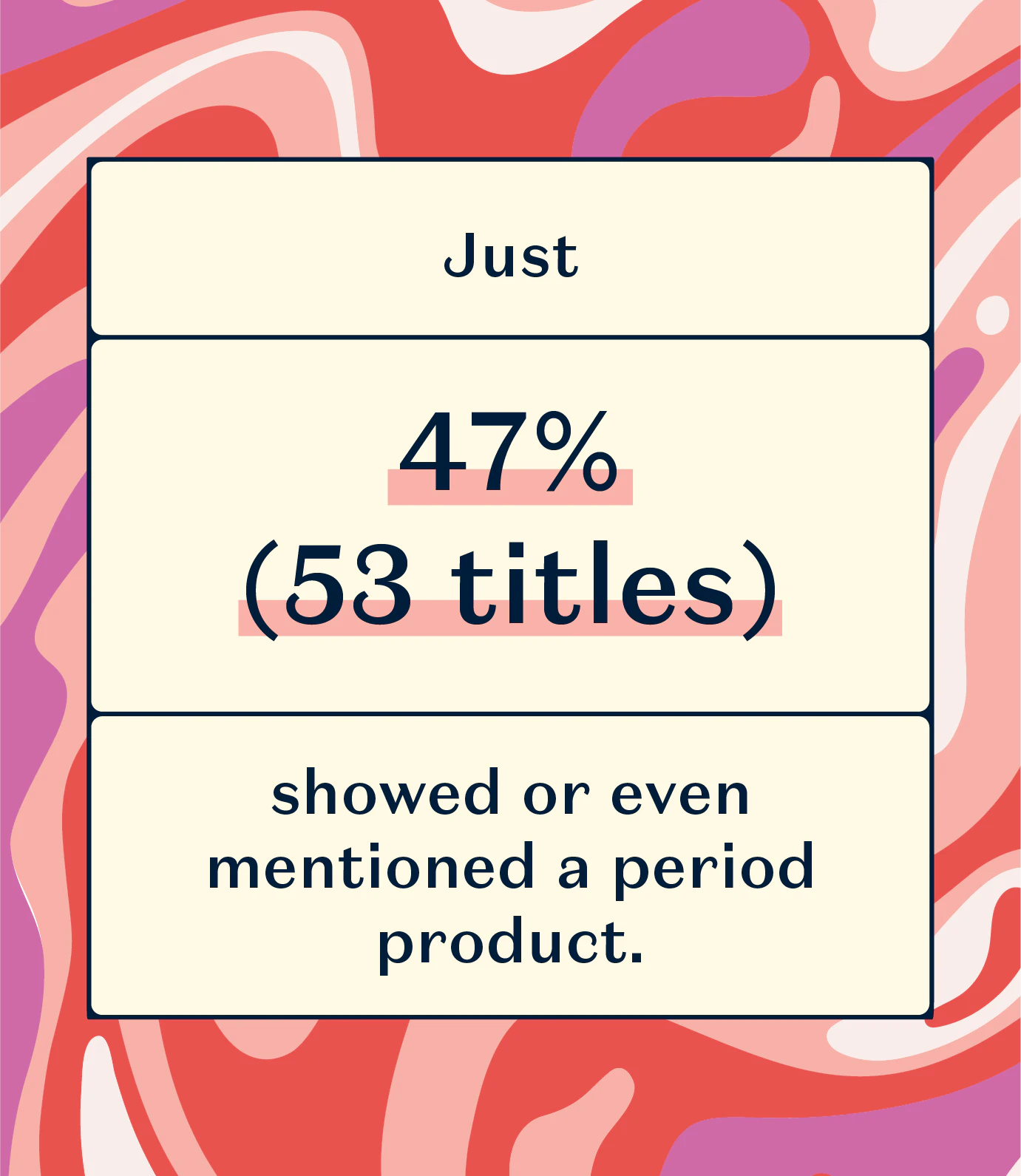
- Only 47% of those show or mention a period product.
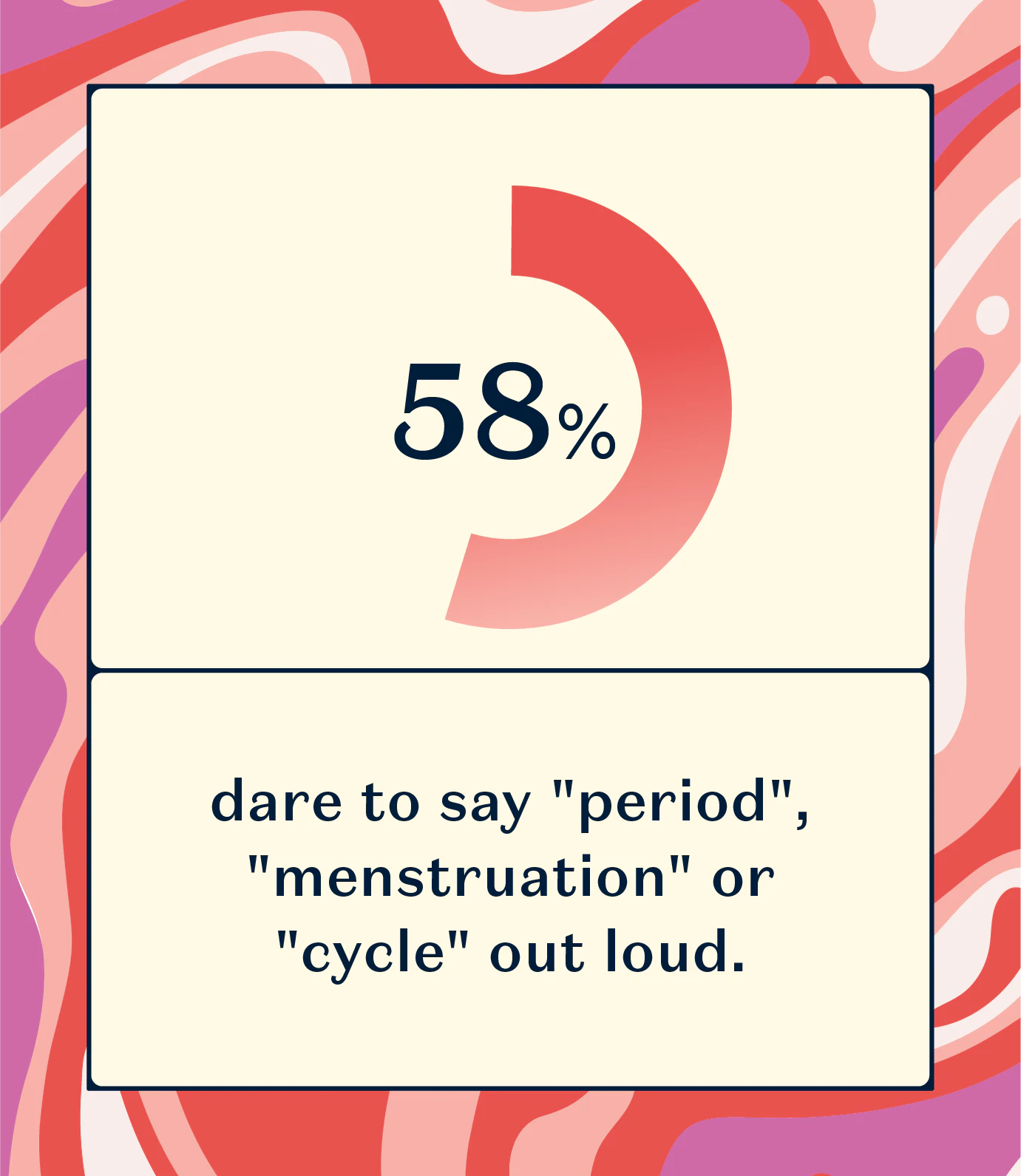
- Only 58% use the words "period", "menstruation" or "cycle".
- 74% of period-related horror films reinforce menstrual stigma.
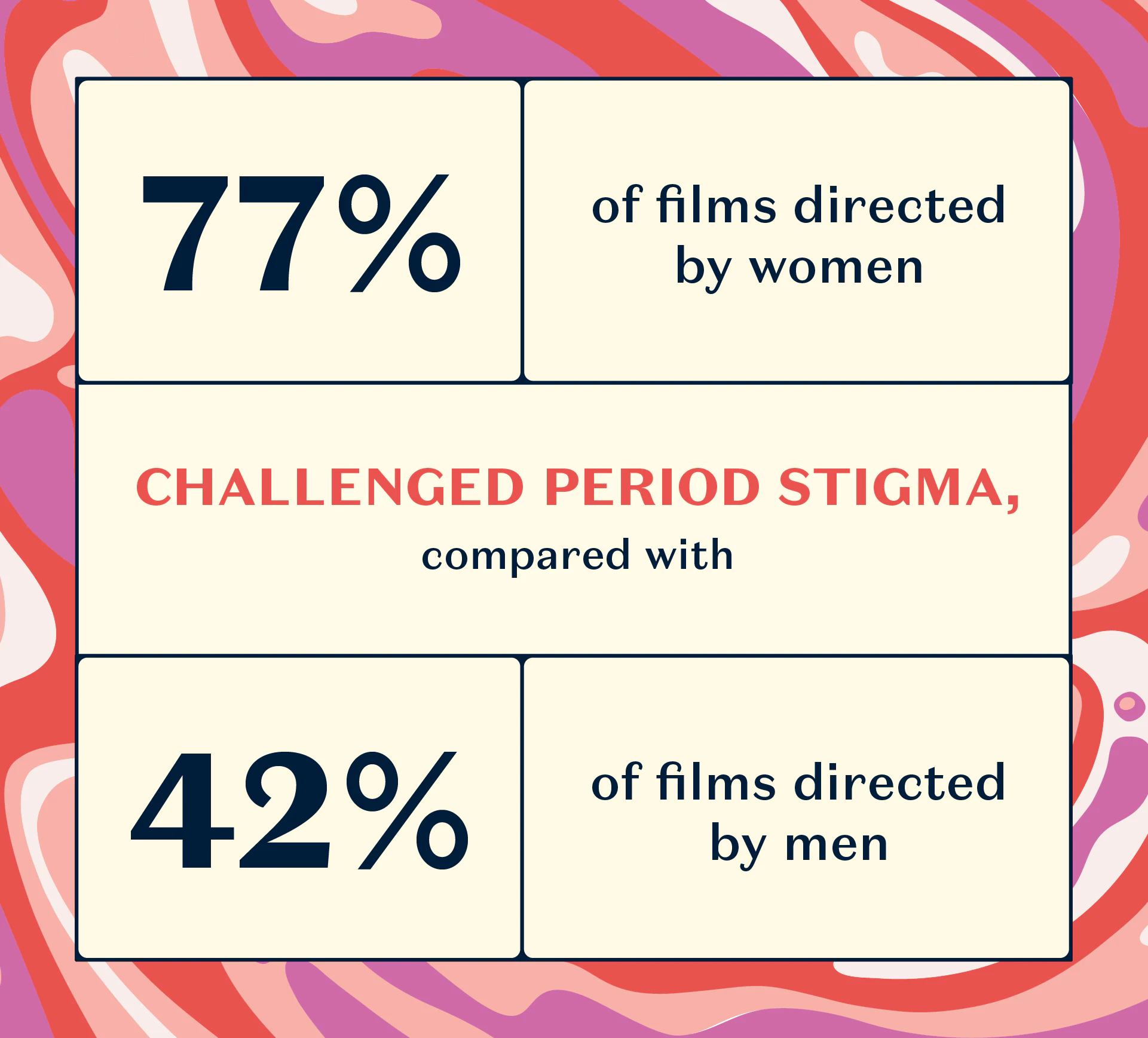
- 77% of films directed by women challenge period stigma, compared with 42% of films directed by men.
- Seven titles scored a perfect 100 on our Bechdel Test for Periods.
The first time I saw Carrie, I was 14, watching it through my fingers. I remembered the prom for years afterwards. The bucket, the blood, the fire. What I didn't remember, until I rewatched it this year for this piece, was how it starts.
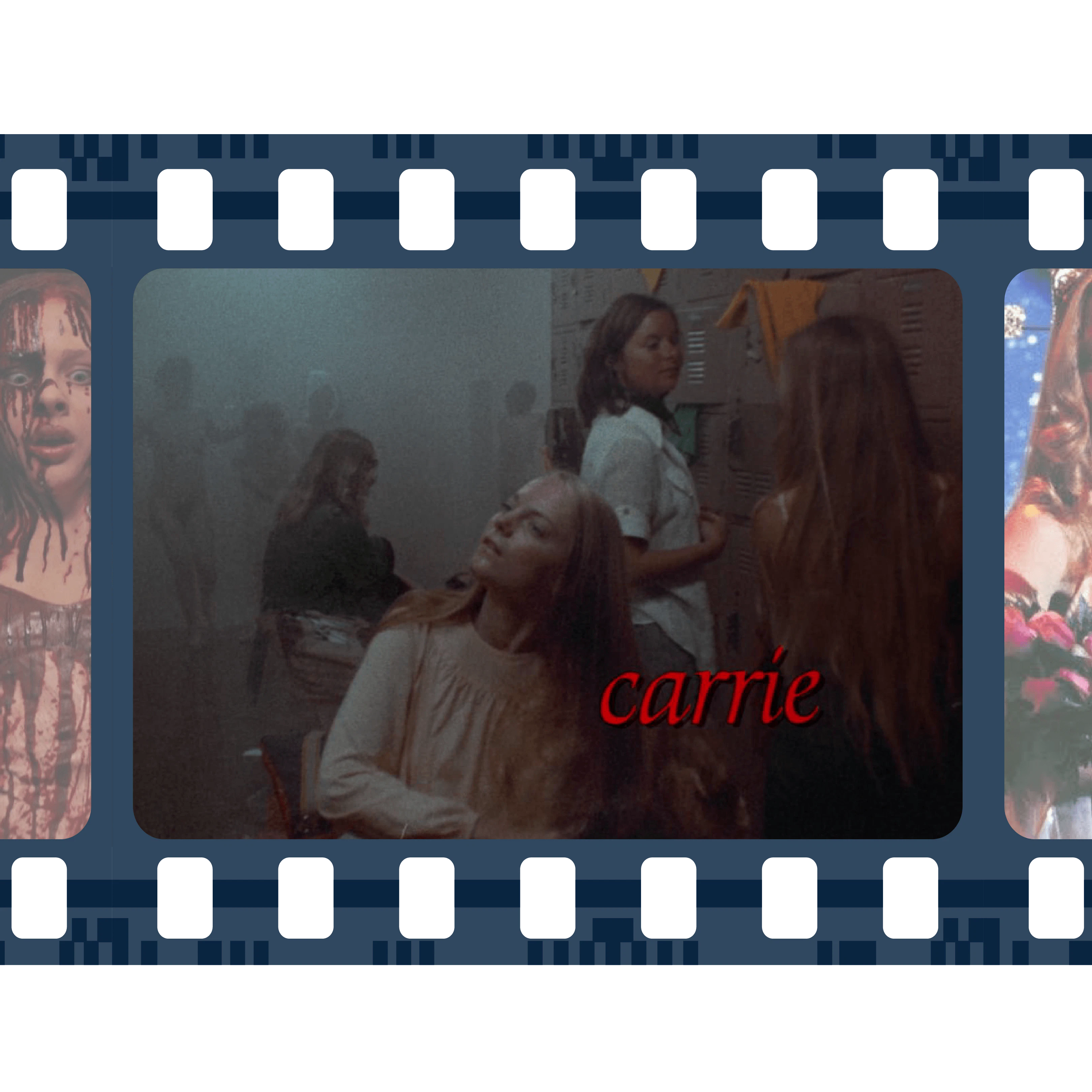
It starts in the school showers. Carrie gets her first period, and she has no idea what's happening. She thinks she's dying. Her classmates gather round her, and instead of helping, they throw tampons and pads at her and chant at her to plug it up.
I watched that scene again with a notebook on my knee and thought, That's the first time a period product appears in this film. As a weapon.
I didn't know it at the time, but I would see that idea again and again over the next few months. Not always as cruel as that. Not always in a horror film. But always somewhere in the background, like a figure standing just outside the frame.
This is the season for that kind of thing. Every October, our screens run red and nobody flinches. Chainsaws are fine. Exorcisms are lovely. A vampire can drain a whole village and we'll pass the popcorn. But there is one kind of blood that film and TV still treat like the thing in the basement: the ordinary, monthly kind. The kind roughly 2.1 billion people are dealing with right now, usually while also answering emails.
So at Daye, we decided to look at how periods in film are really portrayed, and to turn the lights on.
How many films show periods? 117 out of nearly 3,000
We went through nearly 3,000 films and found just 117 that mention periods at all. That's roughly 1 in 25. Then we scored every one of them on how honestly it handled menstruation.
I expected the results to be bad. I didn't expect them to be this consistent. Fewer than half of those titles, 47%, show or even mention a period product. Only 58% let a character say "period", "menstruation" or "cycle" out loud. And who was behind the camera mattered more than almost anything else: 77% of films directed by women challenged period stigma, compared with 42% of films directed by men.
To sort the tricks from the treats, we built the Bechdel Test for Periods. It doesn't just ask whether a period shows up on screen. It asks how.
Only 47% of films that mention periods show a period product
Period horror films and the "monstrous feminine"
Horror has always used the body to frighten us. Blood, transformation, things changing that really shouldn't. Periods fit that toolkit a little too neatly, and they've struggled to escape it ever since. Of the period horror films we analyzed, nearly three-quarters, 74%, reinforced menstrual stigma rather than challenging it.
There was Carrie (1976), of course. Here's a detail I didn't know until I started this research: the famous prom-night pig's blood was actually Karo syrup and food coloring, and Sissy Spacek slept in her bloodied costume for three days to keep continuity.
Then Ginger Snaps (2000), where a first period and a werewolf bite arrive on the same night. You can guess which one the film treats as the real curse.
Then Excision (2012), where menstrual blood becomes part of a disturbed teenager's gory fantasies.
I want to be fair here. Some of these are brilliant films, and their cult status is earned. But together they repeat the same idea: a period is the moment a girl turns monstrous. Film scholars even have a name for it, the "monstrous feminine", the long tradition of horror finding women's bodies, and what they do, terrifying.
Why period products are missing from film
Outside the horror aisle, menstruation in movies does turn up. What tends to vanish is everything that comes with it.
Half of the 117 titles showed menstrual blood. Fewer than half showed a pad, a tampon, a cup, anything. So on screen, the blood makes the final cut more often than the things people actually use to manage it.
In real life, the most common line of period dialogue I know is four words long, and it's usually whispered across a bathroom: Has anyone got a tampon? On screen, it barely exists. There's no pad tucked into a pocket, no box in the bathroom cabinet. There's just a sudden red stain and a dramatic sting on the soundtrack.
What a real period looks like
Since cinema won't tell you, the NHS will. A first period usually arrives around age 12, and not, as a certain 1976 film suggests, as a total surprise in the school showers. It lasts between 2 and 7 days, usually about 5. The total blood loss is about 20 to 90 ml, roughly 1 to 5 tablespoons across the whole period. Not quite a prom-night bucket. And it comes around every 28 days for most people, though anything from 21 to 35 days is common.
Regular. Manageable. Deeply unspooky.
Period Stigma in film keeps coming back for a sequel
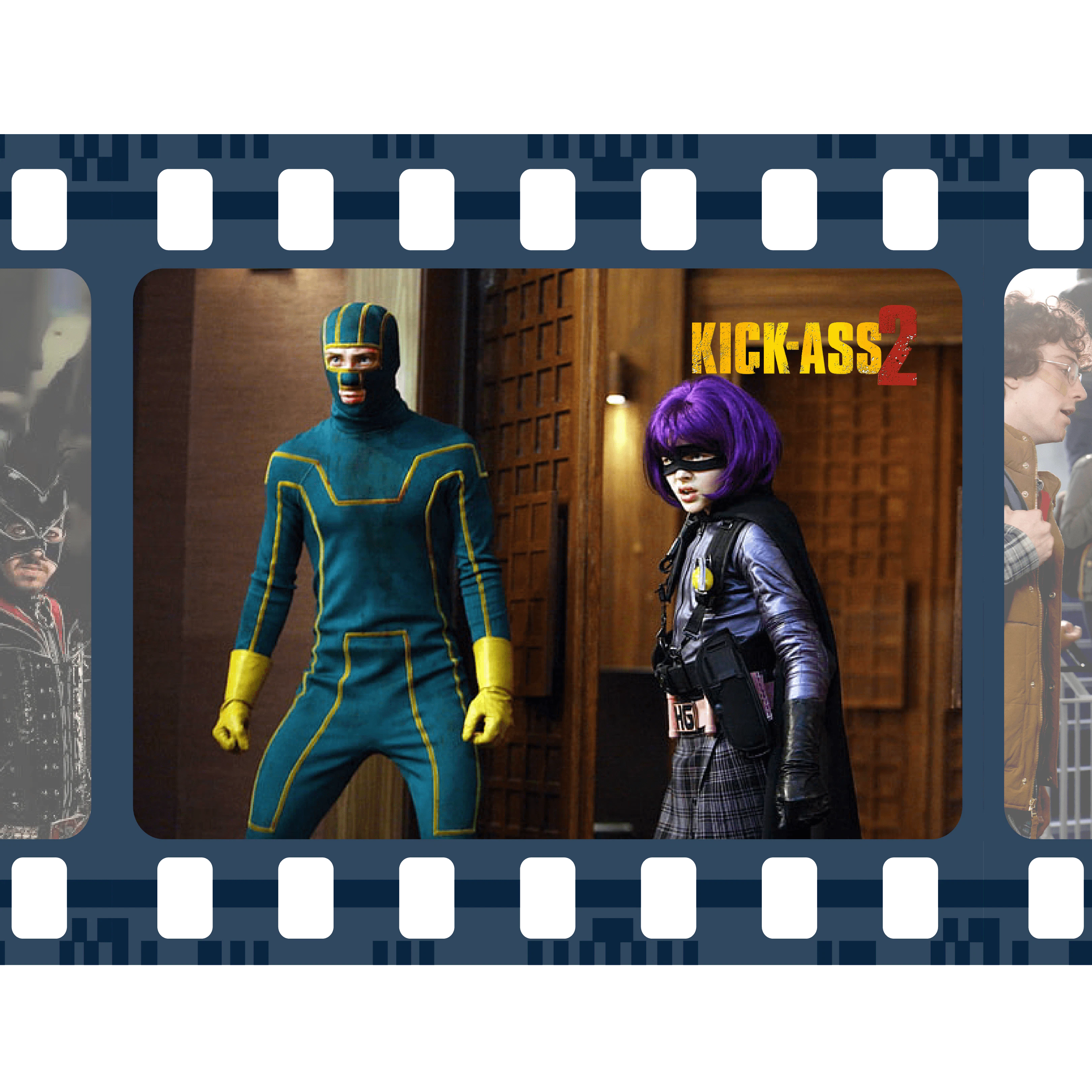
Like every good slasher villain, period shame refuses to stay dead. It just changes costume. In Kick-Ass 2 (2013), it's an insult: a character sneers "Oh, take your tampon out", using periods as shorthand for weakness. In Female Perversions (1996), it's a curse. In The Northman (2022), it's a weapon, with blood used to scare off attackers.
I'd like to tell you that's all in the past. But Netflix's Roommates came out in 2026, and it still shows a character being shamed for putting used pads in her own bedroom bin. A completely normal bit of personal hygiene, played for disgust.
Period euphemisms in film and TV
Then there's the language. Rather than say "period", characters reach for code words that sound more like a séance than a conversation. What they say is different than what they mean. Period is often called "Time of the month", "Monthlies", "The tornado" or "Auntie Rosie".
A euphemism can get a laugh, and that's fine. But said again and again, it sends a quieter message: this is too awkward to name. For something billions of people go through, that's a lot of tiptoeing.
Do female directors portray periods better?
In our data, yes. 77% of films directed by women challenged period stigma, against 42% of films directed by men. That's nearly double, and it's the number I keep coming back to. Who tells a story shapes how it's told.
It isn't a magic charm, though. Pixar's Turning Red (2022), directed by Domee Shi, is widely loved for putting puberty centre stage. Even there, a period is coded as the "red peony" blooming. If one of the most celebrated puberty stories of the decade still reaches for a flower, the habit runs deep.
Is period representation in film getting better?
Slowly, yes. The share of films that challenge period stigma has risen every decade we measured:
- 2000s: 42%
- 2010s: 69%
- 2020s: 75%
That's progress. But it also means a quarter of films made this decade still don't challenge the stigma. Roommates is one of them. The sequel nobody asked for is still in production.
What is the Bechdel Test for Periods?
The Bechdel Test for Periods is Daye's four-part test for how honestly a film or TV show portrays menstruation. A title passes only if it meets all four criteria:
- Menstrual blood: is period blood shown on screen?
- Period products: are pads, tampons or other products present?
- Direct language: do characters actually say "period", "menstruation" or "cycle"?
- Freedom from stigma: does the portrayal avoid shame, disgust and harmful stereotypes?
Each title also gets a weighted score out of 100, explained in our methodology below.
We borrowed the idea from the original Bechdel test, which first appeared in 1985 in Alison Bechdel's comic strip Dykes to Watch Out For. Bechdel credited it to her friend Liz Wallace. It asks three simple things: does a film have at least two women, do they talk to each other, and do they talk about something other than a man? A surprising number of films still fail.
The best period-positive films and TV shows
Seven titles scored a perfect 100. Consider this a Halloween watchlist with a difference.
If you're a horror fan, start with Cramps! A Period Piece, a horror-comedy that plays with period blood without making it the monster.
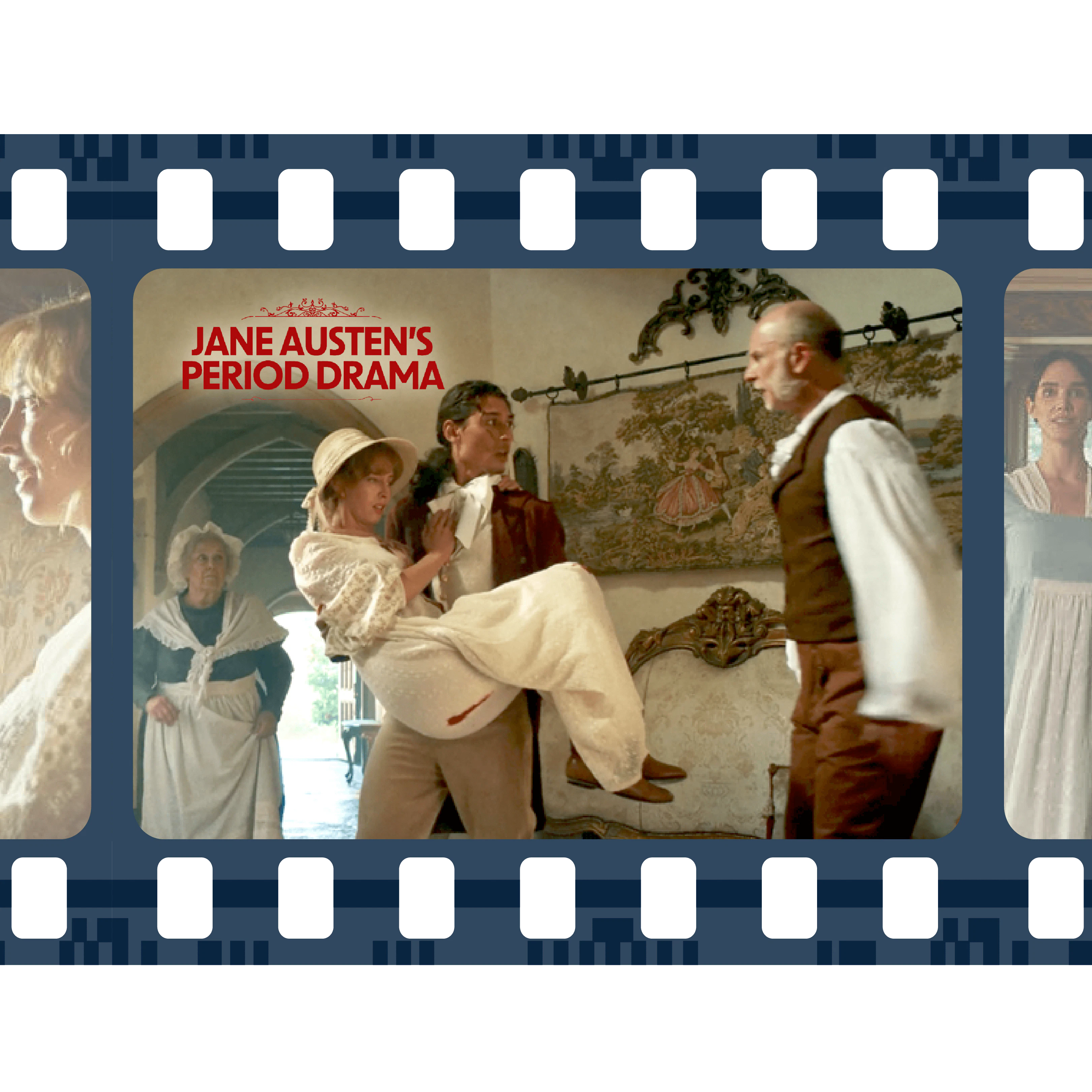
If you'd rather binge, there's I May Destroy You. Michaela Coel's series has a now-famous scene where a bloody tampon turns up mid-hookup and is treated as, well, no big deal. For the costume-drama crowd, Jane Austen's Period Drama is an Oscar-nominated Regency short that puts the "period" in period drama. And for something different, Phullu is an Indian drama about a man who sets out to make affordable pads for the women in his village.
So this Halloween, save the fake blood for the zombies. On screen and off, a period can simply be a period.
Thank you for reading this far.
P. S. Methodology: how we scored periods in film
We compiled films from Letterboxd with scenes that reference menstruation and ran each one through the Bechdel Test for Periods. We also tracked euphemisms and themes of stigma to build a weighted score out of 100.
Scores were applied in context. A film that used blood purely as a horror device, or showed products only in a negative scene (as in Carrie), was penalised.