
We’ve all had stressful days—or weeks, or months—when work and life start taking a toll. It’s an inevitable byproduct of modern life, especially if you’re a woman.
Research shows that women are more likely than men to report that their stress levels are on the rise, and they’re are also much more likely to report physical and emotional symptoms of stress.
Between demanding careers, emotional labour, and generally having to live in a society that’s constantly attacking our most basic human rights, it’s not surprising that we’re all seemingly on the verge of burnout. Even the World Health Organization says so.
Stress is our body’s natural response to change in our environment, so it isn’t inherently bad. Whenever life throws us a curveball, our brains are programmed to, well, deal with it. But when they don’t, stress can cause long-term damage to our mental and physical health, and lead to burnout.
Our bodies have really weird ways of warning us that we need to *chill out*—have you ever been so stressed that you’ve missed a period, or had the runs? That’s because mood, digestion, sleep, blood pressure, sex drive, and even your menstrual cycle can all be thrown out of whack when you’ve reached unsustainable levels of stress.
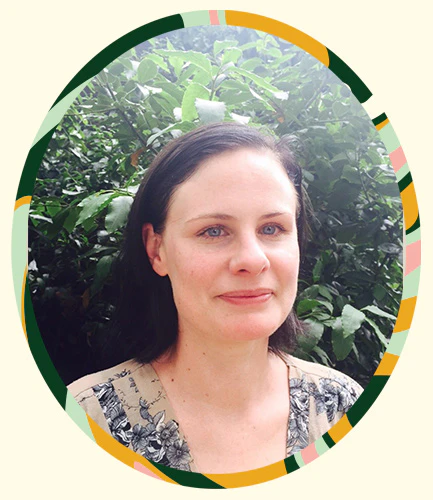
Given that life will always be challenging, demanding and unpredictable, learning how to manage stress and avoiding burnout is key. We enlisted the help of Dr. Erin Miller, a chartered psychologist who specialises in stress and burnout, to learn more.
We know women are diagnosed with stress-related disorders at twice the rate of men. So, why are women so stressed out?
Women are stressed because society’s infrastructure has not caught up to meet women’s needs. I have clients coming in asking what is wrong with them because they feel like they’re not coping with a 70 hour week, 3 kids, an unfair division of labour in their household and limited support at work. They are the creators, carers and leaders. They carry the emotional load at home and the responsibility of their employees. They start the fire, maintain it, figure out a thousand different ways to utilise the heat and they make sure it keeps everyone warm. They also get paid less than others for the pleasure, told it’s their fault children don’t have manners anymore and are occasionally patted on the head and told to calm down, take up less space and stop being so… well.... female.
Gender can determine our susceptibility to mental health challenges, stress and the resources we have available to manage. Societal bias can further increase this susceptibility and can have an effect on resources particularly for transgender women, women of colour, sexualities outside the heteronormative narrative, and those less able-bodied. An intersectionality approach to further research into health is important so no one is left behind.
Women are stressed because society’s infrastructure has not caught up to meet women’s needs.
How do you recognise when you’re on the verge of burning out? What are some telltale signs?
Reduced ability to focus, increased heart rate, disassociation, decision making is difficult, IBS, reflux, insomnia, difficulty in regulating emotions, anxiety, depression, starting to isolate yourself, detachment, and not being as effective.
What are a few preventative measures we can take to avoid burnout?
Firstly, asking yourself the question: “what do I need? If a miracle occurred overnight, I woke up the following morning and my needs were being met, what would this new day look like?”. It is then being assertive with this clarity to find the areas—often small—where changes are possible.
Set boundaries at work, home and socially that serve you. Work out how you replenish your energy. Do you need more time alone? With others that support you? More time to be you without having to be in a role (boss, wife, mother, girlfriend etc.). Access a space weekly where you bring your nervous system into “rest and digest” mode rather than “get ready to wrestle a tiger” mode. This can most easily be accessed through diaphragmatic breathing, mindfulness and meditation.
How can we put those measures into practice?
Small, sustainable changes in your week that you put in your diary can have a powerful short and long-term effect on how you manage the inevitable ups and downs. Again, adding in moments where you access the parasympathetic nervous system (rest and digest) regularly throughout your week can help manage your stress levels throughout the day and the week.
This might be a 10 minute meditation before or after a big meeting, 5 minutes of diaphragmatic breathing after a challenging experience with a colleague, or engaging in a mindfulness exercise before you get home so you can leave your day in the office. Basically, I often schedule in mental health maintenance when working with a client. We look at their week and see where we can create spaces of well-being management.
At Daye, we believe understanding your baseline is the foundation of a healthy life. What’s your advice for trusting your body and mind and living in harmony with it?
In CBT (cognitive behavioural therapy) we attempt to “turn on the intercom” between the experience of external events and the internal belief system about the world, self and others. CBT suggests it is not life events that shape us, but our particular way of experiencing these events. This experience is filtered through our beliefs. This is where you can begin to be your own psychologist, your own scientist and an observer of self. This observer position means you are taken out of a purely experiencing mode into a more analytical mode. This gives you the ability to question those beliefs in order to open up your experience of the world, self and others. It also gives you a baseline of who you are, why you experience certain events in certain ways and what you might bring to your relationships with others. Knowledge of self potentially gives us more choices over our reactions rather than just reacting.
You are actually the most informed expert on your experience of being with your body and your mind. This is invaluable information that can create a sense of autonomy, clarity and hope. It is this baseline of understanding that is almost the foundation of how to access the right resources for you to sustain a sense of well-being.
Work out how you replenish your energy.
What are your thoughts on our generation’s quick fix culture?
There’s nothing wrong with desiring a quick fix, and there are ways to get it. However, inviting more wellbeing into your life involves considering both the short and long-term in order to be sustainable and create the biggest impact.
In saying this, the current culture of fast, now, and quickly provides us with instant gratification. If it’s not coming quickly and our needs are not being met instantly there’s something wrong. Sustainable wellbeing, resilience and emotional sustainability come through a gentle and thoughtful consistency of tending behaviours. They come through making these things not only desirable, but the foundations from which we live and therefore, a major priority. They are created slowly [and] with consistency. They are a process rather than a destination.
What does this type of emotional sustainability look like?
This is going to mean vastly different things to different people. In saying this, more generally, being flexible is important—creating a mindset that can be comfortable with being uncomfortable. Being human means we have a range of emotions, experiences and challenges throughout our lifespan. Sustainability is not the absence of challenging emotions and experiences, it is being able to integrate them into our total experience of ourselves, the world and others.
Sustainability is not the absence of challenging emotions and experiences.
Do you have any absolute don'ts? Anything you absolutely, 100%, must not do if you’re trying to prevent burnout?
Operating from a purely external locus of control. This means all our decision making is affected by others and our external environment opposed to our internal needs and wants. It is a sure path to burnout if you are living a life that is not your own. This requires too much energy for not enough gain.
Anything else you would like to add?
I see women who experience these stressors and ask, “What is wrong with me? I should be able to cope with this more effectively”. It’s ok to say you need help. It’s ok to say you need more support. It’s ok to say “this is not ok for me”. Small changes start with us in ourselves, our relationships, our workplace and our families while we wait for the infrastructure to catch up. In the meantime, we also need to recognise the privileges we have to make sure we stand our sisters that experience additional stressors because of who they are.