


In a few short years, GLP-1 medications have gone from niche diabetes drugs to dinner-party conversation. According to a 2025 RAND survey, nearly 12% of American adults have used one for weight loss, and the biggest users are women aged 50 to 64: about one in five. That's also exactly when estrogen is already on its way down. Hold that thought.
We talk endlessly about appetite, "food noise", and the number on the scale. What we don't talk about is the vagina.
Picture it: six months in, down two dress sizes, feeling better than you have in years. Then comes the itching. A discharge that smells a little off. A UTI, then another. You tell yourself it's stress, or a new soap, or just bad luck. If that sounds familiar, you're not imagining it, and you're not alone. You blame stress, a new soap, bad luck. But there may be real biology behind it, and it starts somewhere surprising: your fat cells.
Did you know: your fat makes estrogen
We tend to think of estrogen as an ovary thing, and before menopause, the ovaries do make most of it. But fat tissue is a hormone factory too. It uses an enzyme called aromatase to turn other hormones into estrogen. As we move into perimenopause and beyond, and the ovaries slow down, fat becomes one of the body's main estrogen suppliers.
So what happens when you lose weight fast, the way many people do on a GLP-1? That supply shrinks. Estrogen can dip, especially if you're over 40 or already in the perimenopause transition. Rapid weight loss can also throw your cycle off for a while, nudging hormone levels around even more.
How big is the effect? In a year-long trial of 439 postmenopausal women at Fred Hutchinson Cancer Center, women who lost weight through diet saw their estradiol levels drop by 16 to 20%, and changes showed up with as little as 5% weight loss. Many people on a GLP-1 lose 15% or more, and often faster.
Lactobacilli and estrogen: unexpected bedfellows
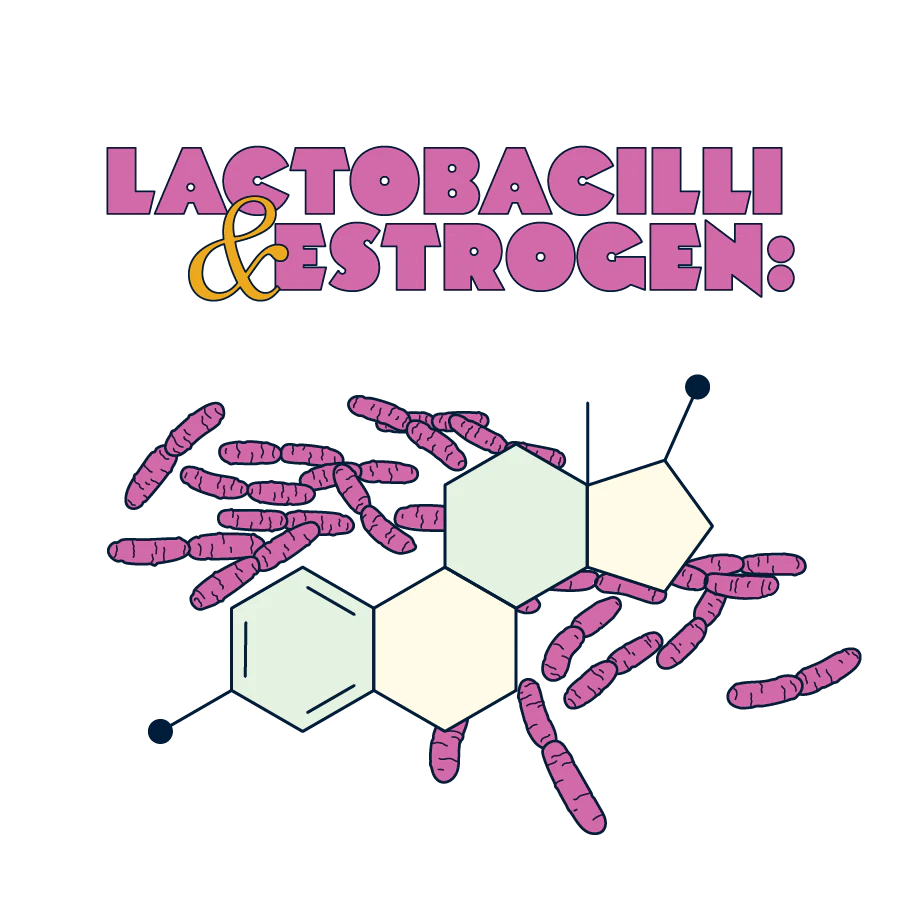
A healthy vagina is run by a small army of Lactobacillus bacteria. They feed on glycogen, a sugar stored in the vaginal lining, and turn it into lactic acid. That keeps your vaginal pH around 3.8 to 4.5, roughly as acidic as tomato juice, which is exactly where unwanted bacteria and yeast struggle to move in.
Estrogen is what keeps the vaginal lining thick and stocked with glycogen. Take estrogen away, and the whole system starts to wobble:
- The lining thins and the lactobacilli's food supply shrinks.
- pH creeps up, rolling out the welcome mat for BV-linked bacteria like Gardnerella.
- Tissues get drier and more delicate, which can mean itching, discomfort or painful sex.
- UTIs get easier, because a less protective vaginal environment lets bacteria reach the urethra more easily.
These aren't rare problems. BV is the most common vaginal infection in women of reproductive age, affecting around 29% of US women aged 14 to 49, according to CDC data, and in one well-known Australian study, 58% of women saw it return within a year of treatment. About half of all women will have at least one UTI in their lifetime.
Sound familiar? It's the same process behind many of the changes women notice around menopause, known medically as genitourinary syndrome of menopause (GSM). It affects 40 to 60% of postmenopausal women, yet in one survey only 4% connected their symptoms to menopause, and almost half didn't know treatments existed. A GLP-1 doesn't cause GSM, but fast weight loss can fast-forward those changes, or turn up the volume.
It's not only hormones
Eating a lot less can also mean drinking less and taking in fewer nutrients, and well-hydrated tissue is happier tissue, everywhere. Then there's the phenomenon the internet has nicknamed "Ozempic vulva": as fat is lost from the area, the vulva can lose volume and look or feel different, which some women notice as changes in comfort, friction or sensitivity. It's not a medical diagnosis, but it's a real experience, and worth mentioning to your clinician if it bothers you.
Now for some good news. If your blood sugar has been running high, the steadier glucose that comes with a GLP-1 may actually lower your risk of yeast infections over time. Yeast loves sugar, and you're giving it less to feast on.
Your vagina-friendly GLP-1 game plan
You don't have to choose between your metabolic health and your vaginal health. A few simple moves go a long way:
- Don't shrug it off. New dryness, odor, discharge, itching or repeat UTIs deserve a conversation with your clinician, not a "that's just how it is."
- Get it checked, don't guess. New symptoms deserve a clinician's eye, as different causes need different care. A vaginal microbiome test can also give you a clearer picture of what's going on, so you can have a more informed conversation with your clinician.
- Ask about vaginal estrogen or moisturizers. If you're in perimenopause or menopause, low-dose vaginal estrogen is a well-studied option for dryness and recurrent UTIs.
- Drink up and eat well. Plenty of water, protein and fiber support both your gut and vaginal microbiomes, which are more connected than many of us realise.
- Join the dots. Your weight care and your gynecological care work best when they talk to each other.
- Check your contraception. If you're on tirzepatide (Mounjaro or Zepbound) and take the pill, it may work less well for four weeks after you start and after each dose increase. Ask your clinician about a backup method.
Big news: Daye x Tia
This is exactly why we're thrilled to announce a new partnership between Daye and Tia. Tia is reimagining women's healthcare with whole-person care that brings gynecology, menopause support and metabolic health under one roof. Daye brings an at-home vaginal microbiome screening kit, so you can learn more about your vaginal microbiome without leaving the house. Together, we're on a mission to close the gap between how women's bodies change and the care they actually get. Starting a GLP-1, navigating menopause, or just done with guessing about symptoms that keep coming back? You deserve to know what your body is trying to tell you, and you deserve care that connects the dots. Stay tuned: more articles, resources and ways to access both are coming soon.
The bottom line
GLP-1s can be life-changing. Knowing how they can affect your estrogen, and with it your vaginal microbiome, means you can stay one step ahead of symptoms instead of chasing them. If something feels different down there, listen. Your body is telling you something worth hearing.